Review: End Times by Peter Turchin

This is a book about a socio-economic bubble. Like economic bubbles, when they pop, political, financial, and social chaos can ensue. Unlike economic bubbles, which always seem to grow larger than common sense should allow but from which nations usually recover, this bubble often, though not always, results in the collapse of the country or civilization involved. I have briefly covered Turchin’s theory in my Amazon review (attached below).

There are ten “planetary boundaries” which, if crossed—and we have crossed six or seven—will certainly doom our present industrial civilization and possibly human life. Briefly, the ten are:

Ocean acidification — Even now impacting our food chain.

Ocean and freshwater deoxygenation — Occurring at an alarming rate planet-wide.

Atmospheric aerosol loading — particles (smoke from forest fires, anyone?) pumped into the atmosphere. Many sources.

Biochemical flows (nitrogen and phosphorus) — from farming and other sources. One cause of deoxygenation in bodies of water.

Stratospheric ozone depletion — we beat this one. Now it’s back.

Biosphere integrity – biodiversity loss – collapse of the food chain — already underway.

Fresh water resource stress and loss — Whole nations—India, for example—are running out of water. 

Deforestation and other land-use problems contribute to the collapse of the biosphere.

Novel entities – Land and water pollution — heavy metals, plastics, non-biological wastes. 

Climate change — the big kahuna! Impinges on all of the above.

See this link for more details on these.

What do these ten items have to do with Dr. Turchin’s socio-economic theory? Among other things, Dr. Turchin tells us that external factors like hostile nations, wars, and stresses like the ten listed above—all having economic implications—act to make collapse triggered by the socio-economic cycle he describes more likely.

According to Dr. Turchin, the United States came close to a collapse into populist autocracy following the Depression of 1929 thanks to the same dynamics—stagnant wages leading to the immiseration of the working class, a gigantic wealth gap, and the overproduction of elites. Franklin Roosevelt’s election and policies—taxing the rich and using the money to build real public assets—pulled us back from the brink. Ironically, World War II gave his policies an unexpected lift, and the good they did helped the nation coast through mostly good economic times for over thirty years following the war. 

But things began to turn downwards again in the mid-1970s. Working-class wages stagnated, and taxes on the rich were reduced to the extent that overproduction of the elite class and an enormous wealth gap were inevitable. In Roosevelt’s time, the American Congress was not as fully captured by the monied elites as it is today, and perhaps even more significantly, planetary physical systems had not crossed any of the ten planetary boundaries listed above.

In the 1910s, there was, in fact, an interconnected, globalized world, albeit with a lower bandwidth than in our present. An Englishman in Bristol could pick up a telephone and order cigars from India with a reasonable expectation of delivery—though not in two days. World War I put an end to that early version of globalization. Since World War II, it has reassembled itself, this time at a far more frenetic and energy-intensive pace. 

There was a crisis of asset prices in the 2007-10 financial meltdown that might have ended us. In the U.S., Obama’s policies ended it, but not like Roosevelt! Roosevelt took money from the rich and built tangible assets—dams, electric grids, highways, etc. Obama didn’t touch the rich, but re-inflated asset prices (mostly homes and the stock market) on internationally borrowed money. See “Ages of American Capitalism” by Johnathan Levy for more. Rather than correcting the excesses, Obama increased them by making room, in Turchin’s terms, for more elite overproduction.

The Trump presidency made matters worse by increasing U.S. debt to over one hundred percent of our gross national product for the first time. The COVID-19 pandemic, forcing the Biden administration to do more borrowing, was—and still is—another stress bearing on Truchin’s thesis. Today, the U.S. is embroiled in two wars (Ukraine and the Middle East), a quasi-war with China, and trying to deal with ever-ballooning bills for weather-related disaster relief. It is not unreasonable to imagine that the election of Donald Trump in 2024 could be the spark that brings to its end four hundred years of “Western civilization” since the Enlightenment. If I read Turchin and the world situation correctly (have I ever? We shall see), and as I’ve said for years now, this time civilization, such as it is, and sooner rather than later, doomed.   

End Times by Peter Turchin 2023

A well-written, high-level analysis of why societies—throughout history—cycle between growth and strength and then weakness and [potential] collapse. Often, the heights and depths to which these cyclic ends go are determined by factors like climate, geopolitical environment, institutional resilience, and the character of individual leaders. But the cycles themselves are the result of an impersonal and shifting movement of wealth within any given society, and this seems to be true of every culture the author could study going back to ancient Rome, China, Europe, and the U.S., from roughly 1600 to today is the focus.

Turchin calls his method Cliodynamics (‘clio’ ancient Greek for history). It involves the collection and cataloging of vast troves of historical data and systematic analysis of that collection using models tuned by taking the data of social growth and decay (for example, from 1500 through 1850) and then running the models through to the present to see how well they predict what we already know to have happened.

Three short appendices describe the process in non-mathematical terms. The bulk of the book, its first half, reviews the results of the cliodynamic investigation for our present time. The short of it is that we—the U.S. (Turchin’s main focus) and much of the world—are at a cliff’s edge, and the cliff is unstable and about to crumble, hence the book’s title.

There is the immiseration of the larger—laboring or unemployed—population. This means that wages are falling in real terms from decade to decade. Salaries do not cover the cost of living, often with two working adults in the household. At the other end of the economic pyramid are the economic elite, in today’s terms, the billionaires. Because they control so much of the total capital, they can dictate the economics of the laboring class. Government labor policy is heavily influenced, even outrightly purchased, by their money. To the extent that it controls coercive power, the government itself is a facet of the elite. In between the immiserated and the elite is an educated (in the technical sense) technocratic class and a group (call them the entrepreneurs), even better educated, who aspire to become elites.

Instability arises because there is room economically for only so many elites. Eventually, so much wealth concentrates in elite hands that the immiserated starve, depriving the elites of even low-cost labor. This isn’t good for anyone, so more frequently, some of the elite aspirants become counter-elites. They become the opposition, populists, and revolutionaries. They have the organizational and political skills to utilize starving labor as muscle in the business of overthrowing the system and establishing themselves as the new elite class.

Every culture and every time will vary in detail. How the revolution fares depends on the coordination of the masses, the unity of the elites in response to the challenge, and factors external to all. In the 1920s- 30s (U.S.), the then government was strong enough to force the elites to reduce their numbers (via taxes) and pay to alleviate the impoverishment of the laboring class. From the 1940s through the 1970s, wages grew in real terms. There were fewer of the truly impoverished. A large middle class arose.

So what happened? The middle class invested in the education of its children, resulting in an explosion of elite aspirants! At first, there was room at the top. There was money to be wrung out of the labor pool. Eventually, labor was immiserated again, and the elite ranks became overcrowded. New counter-elites arise, and the cycle begins again.

This is the oscillation Turchin describes. His version is more nuanced and sprinkled with historical examples that mark the various cyclic turnings. I hope I am not being unfair to Turchin. I’ve read and reviewed six or eight books on the theme of why nations fail, or why a particular nation failed, or the present day’s economic predicament, or the roots of Trumpist populism in America, and so on. End Times is consistent with all of them and gives the reader a bird’s eye view of a larger process rooted in economics and human psychology—humans are greedy. They want what is best for their families and class (though, to be sure, sometimes they do not understand what that comes out to in the short term). That leads to an inherently unstable competitive dynamic because the point at which the elite class becomes numerically saturated and the point at which that fact is recognized can be a generation apart.

As I noted above, the details and time frame vary considerably from place to place and age to age. Much depends on factors in both the internal and external environment of the society under study. Turchin gets into all of this, the what, how, and why of the process. An excellent read for anyone interested in the cycles of history and power politics.
Book Review: Water

This review is not on the blog because of dangling philosophical issues, but to add to a series. “The Uninhabitable Earth”, “The Geography of Risk”, and now “Water”, each in their way tell us (boldly or in hints) about what is about to befall the Earth in the next 20-50 years and beyond. 

Oddly, for me, this all began with Slavoj Zizek’s “The Courage of Hopelessness”. In commenting on that book I pointed out that economic exhaustion precipitated by climate change mitigation will collapse the present capitalist world order long before the left ever has a chance to make a substantial impact. I then stumbled on these other books, reviews and Amazon links all given above. 

Water by Steven Solomon (2011)

A long book methodically drilling down into an important subject. Of all Earth’s resources, air and water are the two most necessary to sustain life, and of the two only water exists in three phases, gas, liquid, and solid, on in and above the surface. There have been other books covering the history of water (particularly freshwater) use since antiquity. Solomon goes the extra mile and looks at water from more than the usual angles. Learning to sail the oceans is a part of the water story as are the world’s inter-continental canals (Suez and Panama) and oceanic choke-points (straights like Hormuz and Malacca) and also the story of the steam engine. He also notes that food is “virtual water”. Not only is water a consumable input in growing crops, but is also a component of the many steps needed to bring the crop to the table. 

Solomon begins with a review of the freshwater situation on Earth and then visits every historical civilization digging into their history of freshwater management. A general cycle is visible everywhere. A civilization arises when its region’s water resources (including bordering seas if any)  are successfully tapped to yield increased food, strategic trade or military advantage, or lower cost, usually all three in one mix or another. Successful water management results in population growth and territorial expansion until the population reaches the limits of its technology’s ability to maintain and expand its water management. Politics plays a role. Even where technology and knowledge exist, a society may become unwilling, politically, to do what is necessary to manage a degrading water system. As water management declines, so does the civilization, and this is so even where the needed water still exists. In the modern age, existing water, at least freshwater, is being increasingly used up or evaporating away as ancient glacial stores melt.

The real problem of course is not exactly water but population. Solomon notes but does not comment on this, rather treating it as an inevitable background to the whole story. On the one hand, an expanding population needs more water, but it also increasingly pollutes and otherwise abuses the freshwater still to be had.  

Having reviewed water history around the world all the way up to the end of the 20th Century, Solomon goes into the modern challenge. He revisits each of the world’s regions and summarizes their present and near future water challenges. Climate change is re-arranging the freshwater balance around the world. Some places become much drier, and others much wetter. Winter snows melt earlier in the season, and summer heat more quickly evaporates stored water. Mitigating water-related disasters, whether larger fires in dry places or bigger, longer-lasting floods in wetter ones, are consuming a larger percentage of the world’s resources. Technological and political success managing these changes is key to the survivability of each nation, and the world collectively. There is no guarantee of success and in fact, the present trajectory does not bode well for anyone.

Review: The Uninhabitable Earth by David Wallace-Wells

Some months ago I reviewed Slavoj Zizek’s “The Courage of Hopelessness”. I suggested that Zizek’s political projections would have little chance of materializing because economic collapse precipitated by climate mitigation efforts in the rich world would overwhelm everything else in but a few short decades. Next I came across G. Gaul’s “Geography of Risk” which, though focusing on storms and sea-level effects on the U.S. East and Gulf coasts, supported my prediction. Now this, “The Uninhabitable Earth” (review & link below), comes along amplifying everything in the Gaul book and laying down an even more frightening picture not only about where present trends are taking us, but the almost certain inevitability of vast tracts of the equatorial and presently-temperate Earth becoming uninhabitable by 2100.

Most of the cascades described by Wallace-Wells have already been triggered and will not stop (though they would slow a bit) even if we ceased all industry-related atmospheric carbon production tomorrow, something that is obviously not going to happen. Technology (as he points out) is not going to save us this time. We do know how to pull carbon out of the air yes, but as Wallace-Wells shows, we cannot afford to deploy enough of it fast enough to block a two to three degree (celsius) rise in average global temperatures over the next 75 years.

Wallace-Wells is (non-optimistically) hopeful that humanity will wake up in time to stop carbon output at least soon enough to halt future warming at three degrees. In fact I believe human industrial carbon output (most of it, globally) will cease in another ten or twenty years, roughly when we are close to two degrees of warming (as of 2018 we were at one degree and some change with atmospheric carbon rising faster now, year on year, than it has ever before). But it won’t stop because humans wake up and do something about the problem. It will stop because all of the economies of the world will have collapsed. Over a few decades, people will starve (or die from disease and war) in such vast numbers that few will be left to put any substantial carbon into the atmosphere more than the cooking fires that could be found dotting the Earth ten thousand years ago. The human population will be about where it was ten thousand years ago. That might be by 2100, likely sooner than that.

Still all of the cascades, devastating forest fires and melting permafrost will yet be releasing billions of tons of carbon even in the absence of human industry, and of course ocean levels will continue to rise utterly changing the geography of the world. By 2200 there will be very few places on Earth where food can be grown or hunted and the human race may be reduced to levels barely able to avoid extinction, if even that. If this isn’t frightening enough, the news gets worse from here. Even if the temperature rise tops out at three or four degrees, the planet will not again return to a cooler, human-comfortable climate regime, for thousands, possibly tens-of-thousands, of years!

Here is another book on the subject reinforcing the idea that we are in bigger trouble than we think: “Water” by Steven Solomon, 2011

Uninhabitable Earth  by David Wallace-Wells 2018

This book opens with what, for me, was a surprise. I know that carbon emissions have, world-wide, steadily increased even since the first international “climate mitigation agreements” of thirty years ago. What I did not know is that since 1990, the world, collectively, has pumped twice as much carbon into the atmosphere as it did in the thirty years from 1960 to 1990. There are other surprises: Bitcoin anyone? Sure there’s some electricity involved but how much carbon could that be? It turns out to be about as much, per year, as one million international jet flights! Our own industrial activity is only a part (albeit still a large part) of the problem now. Other, cascading effects, are now adding their impact. Global wild-fires now consume, on average, ten times as much forest every year as they did thirty years ago. That’s a lot of extra carbon. Even worse, the world’s permafrost is beginning to melt releasing carbon in the form of methane which, depending on whether we are speaking of low or high altitude, has between four and eighty times the warming effect of carbon dioxide.

The title of the book is prescient. Think of the climatologically worst environments on the Earth today (having warmed a bit more than one degree Celsius since the beginning of the industrial revolution in 1800. We are on track to hit two degrees by 2050 or so), perhaps the middle of the Sahara, Arizona in the summer, or someplace where it never stops being hot and raining. These are today’s most inhospitable climate environments. By 2100, that sort of place will be among the best and most livable we have on Earth. Large parts of our world will be largely and literally uninhabitable, places where humans die because their bodies cannot cool themselves by sweating unless immersed in cool water, or because there is no water the glaciers being gone, and this at only three degrees of warming (2100).

The first third of the book is about various cascades, most already triggered, some on the verge. Effects of warming add up both by directly making things worse and by degrading the planet’s ability to absorb carbon and mitigate the other effects. Wallace’s picture here is very dire. In the rest of the book, Wallace deals with the economic, political, social, and psychological future. Here I do not think he is dire enough. He speaks of refugees in the tens of millions (try hundreds of millions), extremist movements on both the right and left, of wars, pandemics, crop failures, of collapsing economies unable to sustain the cost of climate mitigation, and that only the economies that can afford any mitigation to begin with. The rest will have since joined the refugees. Wallace touches on all of this, but I do not think he fully appreciates how quickly and thoroughly human beings can (and will) turn on one another long before this all becomes as bad as it’s going to get!

Technology will not save us. Wallace covers that too. We can desalinate water and even pull carbon out of the air. There will never be enough of either that the world can afford. Besides, both are energy-intensive processes, and even if powered with renewable energy, that is not easy to do as concerns the long chain of activities needed to build and maintain that technology. Solar and wind power, for that matter almost all modern electronics, require elements called “rare earths”.  Rare-Earth mining is a carbon-intensive process.

In the end, Wallace is hopeful, though not optimistic, that the global polity will wake up and de-carbonize the global economy, not in time to halt two to three degrees of warming, it is already too late for that, but in time to prevent it going to four degrees or more. I think he is over-optimistic here too. It is simply not possible, politically, and this for economic reasons, for soon-to-be nine-billion humans to de-carbonize as quickly as needed to hold the line at two to three degrees. What will force the race to de-carbonize will be economic collapse, leading to socio-political collapse, leading to mass death (over some decades) from starvation, disease, or war. I think Wallace sees this grim possibility. He hopes it isn’t inevitable.

This a good and timely book though I doubt it will have much effect on the carbon trajectory of our so-called civilization. It is good to see the ground covered as much as Wallace covers it. He does a good job of showing how the climatological and the political go together (alas perversely). I think he fails to draw some obvious conclusions from his own well-made points. Perhaps it’s for the better. He would be accused of doom saying. I am a doomsayer! Feel free to accuse me! Meanwhile, the book is frightening enough as it is!

Review: The Geography of Risk by G. Gaul

This well written book hasn’t any philosophical implications on which to comment. I put this here in my rapidly expanding “book review” subsection because of its relevance to my commentary on Slavoj Zizek’s “The Courage of Hopelessness”. My commentary on the Zizek book ended up being mostly about climate change and ecological disaster, something that Zizek mentions but doesn’t much talk about. My point in that commentary was that the re-making of the world’s social, political, and economic orders that are the focus of Zizek’s book (many of his books in fact) will be made mostly irrelevant thanks to the utter destruction of the present global order beginning with its economics.

That’s what I said about Zizek. Specifically, with regard to the United States I said that climate change would soon bankrupt it, and that long before the impact of the twin phenomena (climate change and [partial] ecological collapse) was fully felt. Now a couple weeks after writing that commentary, along comes this book which, while focused on a singular aspect of the problem (the U.S. East and Gulf coasts), illustrates and puts numbers to my claims.

The Geography of Risk by Gilbert Gaul (2019)

Only two weeks ago I wrote a blog essay commenting on another book I recently reviewed (Slavoj Zizek’s “The Courage of Hopelessness”). In my commentary I pointed out that the on-rushing phenomena of climate change will shortly (next few decades) overwhelm the social, political, and financial capacity of any national or even supra-national organization. I accused Zizek of ignoring “the elephant in the room”. Only a few days after that essay (see my Amazon profile for blog address) this book by Gilbert Gaul appeared on my radar. Its title alone seemed a validation of my claims. I was not disappointed, though as it turns out, the focus of the book is geographically very narrow.

Dr. Gaul is an expert in the economics, geography, and risk of coastal and near-coastal communities of the United States Eastern and Gulf coasts. That, specifically is what this book is about. He is easy to read, gives us all the important numbers, but isn’t dry. He tells the story historically through the eyes of many involved: developers and politicians one one side, scientists and some of the engineers tasked with fixing a hopeless situation on the other.

Why this region? First, the U.S. Eastern seaboard, especially from New Jersey to southern Florida, and then throughout the Gulf of Mexico is riddled with barrier islands made mostly of sand, and then behind these barriers lots of shallow bays, estuaries, and low-lying land sometimes extending inland hundreds of miles. Second, all of this coast is among the world’s great hurricane and “rain bomb” bowling alleys. Third that same coast, all those barrier islands, have evolved demographically from a few fishing villages in the 1940s through inexpensive (once middle class) small summer homes costing a few thousand dollars, to multi-million dollar mansions. Fourth, back in the 1950’s the Federal Government covered 10% or 20% of the cost to rebuild thousand dollar homes when storms destroyed them, today the government covers 90% of the cost to replace a like number of million-dollar homes!

The net result of all this is that the taxpayers of all States, not just the coastal states affected, were, 70 years ago, on the hook for a few millions of Federal dollars spent on this process. Today, the number is in the hundreds of billions! As it turns out, according to Gaul, the cost to U.S. taxpayers to repair hurricane and rain damage to places that are destroyed by these weather phenomena every decade or so (sometimes more) is higher than damage from all other disasters (inland floods, fires, earthquakes) combined and by a big margin.

How this all came to be is much the focus of this book. In the end the answer is politics and economics. Take a barren piece of sand and put a few homes on it. Soon you begin to need services, sewers, roads, traffic control, bridges, banks, and so on. There come to be small towns with mayors, police, fire fighters, contractors (building and repairing homes), bankers, and so on. These are jobs paid for by property taxes. When the properties are destroyed (repeatedly) the tax base disappears and all these jobs are threatened. The solution is always to build back as quickly as possible and to make up for the temporary losses faster, to build more and bigger. As all of this re-construction occurred, the homeowners themselves could afford a smaller and smaller percentage of it all. To save the jobs (and ever larger community tax bases) Federal tax payers assumed a larger percentage of the replacement cost until today, this often comes out to more than 80% of costs to rebuild homes of millionaires and 100% of the ever growing network of roads, flood control projects (which never survive more than one next storm), bridges, sewers, and so on.

Of course all along these decades there were individuals in and out of government who pointed out that this cycle was absurd and would eventually become un-affordable not to mention physically unsustainable as the islands became smaller (erosion) and bays and wetlands were filled in to make yet more homes (and roads), further increase the tax base, and in consequence make it more difficult for high water to drain exacerbating the problem. The solution of course is to stop the building, abandon the islands back to small fishing villages, and let the waters do what they will. But repeatedly re-building small homes and a few services back on line meant jobs and now re-building big homes and greatly expanded services means even more jobs and trying to protect those towns (a hopeless endeavor) is always wasted work (Gaul gets into some of the crazy numbers). But millions of jobs are now invested in the continued functioning of those economies! The cycle goes on!

All of this and I haven’t even mentioned climate change. The economics and politics of this process is the focus of Gaul’s book, but he doesn’t ignore this. The bottom line here is that it would be bad enough to be loading American tax payers more and more economic risk as the economies of these storm-prone places get larger. Even if the storms and sea levels stayed constant the economic burden on the American taxpayer is already onerous and growing. Climate change will only make this worse. Gaul’s focus is the American East and South coasts whose risk grows disproportionately because of its exposure to more frequent, bigger storms and sea level rise. But he is well aware also that interior climate-related disasters, fires and floods, will grow in severity and so cost.

In my blog commentary mentioned above I said that this problem generally, this growth in the cost of disasters, would, in another decade or two, bankrupt the United States. Gaul’s book, though narrowly focused, is an argument for my claim.

Review: Why Nations Fail

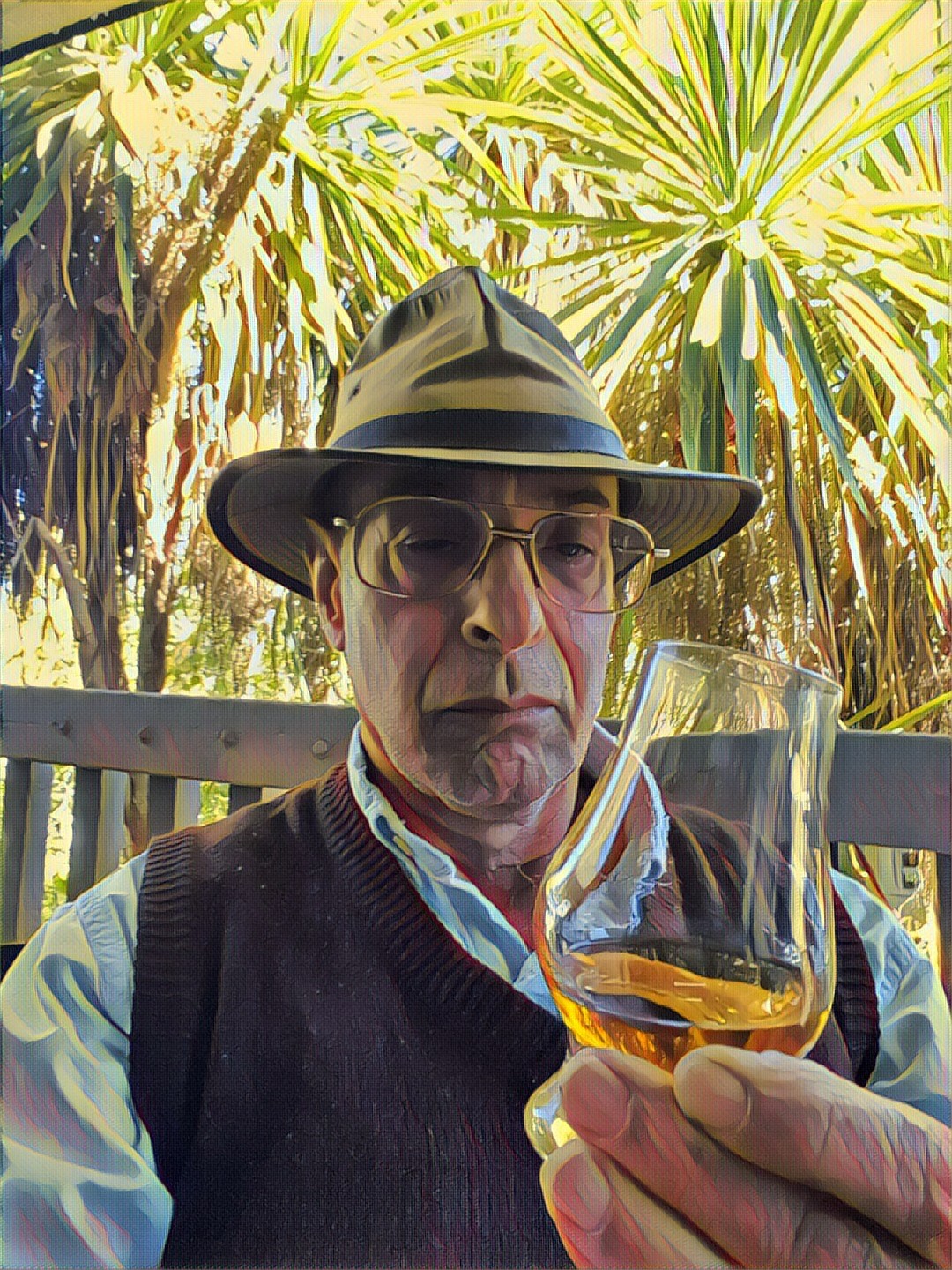
Picture of me blowing smoke

I’m developing something of a sub-section on social, political, and economic philosophy…

I said in the review (reproduced below) that the theory of this book very much compliments that of Francis Fukuyama also reviewed here. There are other books in this arena as well, one by Phillip Bobbitt and one by Henry Kissenger. Each of these books has something to contribute to the same subject, roughly the history of nations on Earth. What I didn’t say in the review is reflected in an early marginal note that appears in this book. I wrote that this theory of Acemoglu and Robinson, given their introduction of it, seemed “trivially true”. What I meant was that given equality of other things, a nation whose political and economic institutions were more pluralistic would, on the whole, do better economically than one whose institutions were less pluralistic. I think the authors mount a powerful argument for the theory. I think they are right. But I still think that on the whole the theory is but trivially true.

To begin, the authors examine and reject a few other theories purporting to explain why some nations are wealthy and others not so wealthy. In particular the “cultural” and the “geographic” theories are of interest here. The authors very much emphasize that the institutions of which they speak emerge through history. The process can and has taken hundreds of years in some cases and the results have always been contingent meaning that only a small difference here or there might have blocked such evolution (as it has in much of the world) or reversed it even once begun (something that has also happened). The authors emphasize that small differences between institutions in different states are magnified by “critical junctures”, events like the Black Death, the discovery of the Americas, or the invention of movable-type printing.

The authors trace these differences and how different nations (in 1600 all “extractive” as the authors term it) responded politically and economically. These responses are all broadly social, and the social fault lines are reflected by culture and in turn rest on geography. In England the Magna Carta was signed in 1215. It gave the nobility a little say over what the King did, but it was hardly inclusive politically as we would understand that today. The plague followed in 1348, 133 years later and shifted things a bit more by pure chance. A greater percentage of English nobility was wiped out than was the case for example in France, Spain, or Eastern Europe.

Four hundred and seventy three years intervened between the Magna Carta and the Glorious Revolution (1688), almost nineteen human generations. The book covers much more of the intervening details for example the War of the Roses, the Cromwell experience, and the installation of William of Orange. This history is what set the culture of England and insured that the English response to events would be different from that of France or Spain.

Cultural differences are social and subject to contingent social forces. The only thing contingent about geography (used broadly and into which I am folding climate and mineral resources) is which nation ends up with which territory.  Rwanda, Burundi, and Ethiopia grow delicious coffee, among the world’s best. Their coffee growing potential has nothing to do with culture and everything to do with where they are situated in the world. But none of the three have any coast. To ship their coffee to world markets each must pay transit fees to other nations in order to reach some port. If Ethiopian coffee farmers are to reap the same economic benefit as say producers in Guatemala who also grow superb coffee and do have access to a coast, Ethiopian coffee must sell for a higher price than Guatemalan coffee. Even if Ethiopian and Guatemalan economic institutions were equally inclusive (or extractive) Ethiopian farmers cannot get the same price for their coffee if they (or their elites) want to compete (and so sell for the same price) with Guatemalan farmers.

To wrap it up, nations with pluralistic institutions generally become wealthier than those without and the historical path from extractive to inclusive institutions is contingent. But among the contingencies are the culture as it evolved through many generations, and the location of the nation on Earth which limits, magnifies, or otherwise impacts the cultural contingencies and the possible wealth that might be generated under different institutions.

In my Amazon review (below) I bring up the “other end” of the whole process, something that is not the author’s concern. They are interested in why nations are wealthy (or not) now, and not what happens when even inclusive institutions go on too long. They do note that when new groups become wealthy under inclusive institutions, these become “new elites” and begin to work, politically, to constrain future inclusiveness so as to lock in their new privilege.

In the present day, such behavior in the Western and more inclusive nations has resulted in something of an equilibrium between forces, but at any given time one or the other can be ascendant. It is clear from the flattening of U.S. wages and the increase in wealth inequality since the 1970s that since that time, the push back towards exclusivity is gaining ground; an observation the authors seem to deliberately avoid making.

Why Nations Fail By Daron Acemoglu and James Robinson 2012

When I stumbled on this book I wondered how it would compare to the work of Francis Fukuyama in “Political Order and Political Decay” also reviewed. As it turns out the two works are entirely complimentary, the work of Acemoglu and Robinson riding on top of Fukuyama’s. Like Fukuyama, the author’s here recognize that a prerequisite to the political and economic orders that evolve in modern rich nations as compared to poor ones is a State, with writ over its whole territory, capable of enforcing property rights (whether they do so initially or not) and a relatively broad base of economic interests not tied solely to the land. Another prerequisite for both is the eventual evolution of a polity supporting “rule of law” which is not the same as “rule by law”. The difference is that in the former, everyone (in theory) comes under the law while in the latter the elite typically do not. This prerequisite is, in general, a consequence of the broad based economic coalition.

What begins to drive such nations is a feedback the authors call inclusive institutions, a “virtuous circle” leading to yet broader, more pluralistic political institutions and economic institutions characterized by lowered economic barriers, technological innovation, and competition that drives a broad-based increase in wealth. The authors emphasize that a virtuous evolution is not foreordained. There are always forces working to try and coerce political and economic institutions into an extractive mode in which both political and economic institutions are organized for the benefit of a few. This is, in fact, what was the case over the whole world in 1600 and has remained the case in most of the world. Though specific institutions in these countries (Russia, most of South America) have changed many times, they remain extractive and this tendency, the tendency of elites to preserve their status at the expense of everyone else the authors call a “viscous circle”.

Many nations today labor without even the prerequisite of a State writ. Such nations cannot possibly develop inclusive institutions of any kind. But even extractive institutions can grow an economy if the State writ is present and there are resources in demand by the rest of the world. Extractive societies can grow relative wealth, for example Saudi Arabia, but the authors argue (citing case after case, exploring many individual national histories) that there are severe limits to that sort of growth. Like Fukuyama these authors also recognize that even among the most inclusive nations today (mainly Western Europe, the United States, Australia, New Zealand, Japan, and a few others with but one, Botswana, in Africa) are not immune from sliding backwards, particularly as concerns economics, into more extractive forms. Fukuyama, explores how this backsliding happens at the political level, while in this book, aside from the recognition that this can happen, such backsliding in the present is not specifically addressed.

This is well written and richly detailed exploration of political and economic institutions throughout the world. No continent (save Antarctica) is ignored. Acemoglu and Robinson make a fine case, and because the actual history of nations sets these outcomes much depends on how small initial differences are magnified by events out of anyone’s control (the Plague in Europe, the discovery of the Americas, the colonial grab for Africa) they recognize the limitations of their theory as well. The historical path taken by every nation or quasi-nation is unique. Emerging into the modern period there are endless variations. China is unusual in that economic institutions appear to be liberalizing while political institutions remain purely extractive. The difference, also the case in Russia, is that the State is compelled to find some solution to competition on the world stage. Chinese and Russian economic institutions remain broadly extractive and their growth will not continue for long.

The author’s point here is well made and well established. They do not, alas, address the gorilla in the room. Even if all the world’s nations were as inclusive as the wealthiest of today’s States, there are limits to growth. One problem with open-ended competition on a level playing field is that greater wealth ultimately comes down to greater resource utilization. There is only so much to go around. But this is not their problem. The goal here is to argue the case for wealth associated with both political and economic inclusiveness. I cannot find any weakness in that argument broadly conceived as the authors portray it.

Book Review: Assholes A Theory

My only additional comment here is that Amazon rejected my review (below) because it contains the word ‘asshole’. This is political correctness gone crazy. They asked me to delete the word or perhaps change it to something like ‘A******’ but I refused. Considering that the title of the book appears at the top of every review I cannot comprehend how Amazon algorithms would permit the publication of any review of this book. Be that as it may, I am not politically correct and I publish my review of this excellent book here on the blog for your edification.

Assholes, A Theory

Bravo for a brilliant book. Dr. James takes what appears at first to be a trivial notion, “the asshole” as a metaphor for a particular sort of human
behavior and uses it to illustrate how philosophy is done, what it must consider, and the directions in which it can be applied.

He begins by defining the term and then comparing it to other “terms of derision” like ‘jerk’ exploring various examples both hypothetical and drawn from the headlines so that after the first few chapters we are comfortable understanding what an asshole is as compared to other kinds of behavior worthy of opprobrium. Following this set up he moves on to social philosophy; why this behavior exists, how it comes about, various possibilities concerning its root cause (or causes) and why most (but not all) assholes are men. He next discusses what people who are not assholes can do about those who are, both on the individual level and in small or large social systems. In the closing chapters he moves further into the realm of the political and economic. He argues for a refreshing view of what might be called “the problems of capitalism”. Far from the Marxist idea that capitalism is inherently and necessarily unstable, James argues that modern (State regulated) capitalism can be perfectly stable and what makes it unstable are the presence of, you guessed it, assholes, whose behavior distorts the system rendering it less and less stable over time.

Does James make his case here for this final claim? I think he does, and it puts a nice capstone on an all around excellent book in the philosophical arena of ethics. An easy read. If you are looking for an example of good philosophical technique applied to a trivial notion that turns out to have world shattering consequences, this would be a good read.

Searle on the Ontology of Social Reality

This is a very natural pair of reviews. Both focus on the same subject, the social world and how such social phenomena come about be they marriages, sporting events, cocktail parties, governments, or money. He is not concerned with the history of these things, but their ontological structure and how that structure is brought into existence. Searle devotes particular attention to how language, a special social phenomena with correspondingly unique properties. It is precisely language, particularly its capacity to make declarations (“I anoint you King”), and that these declarations can be compounded, that bring about both informal (cocktail parties) and formal (governments, money) social institutions. Language is not necessary to social organization as such. Higher animals engage in social behaviors without the benefit of language. But social behaviors are not institutions. Only humans create institutions, and declarative language is both necessary and sufficient. As Searle puts it, once you have language you already have [at least one] a social institution.

Naturally this raises some epistemological issues. Searle doesn’t much address libertarian free will in the earlier book, but in the later he has to address it because he recognizes that the obligations and powers of institutions, even abstract ones like money, ultimately devolve onto individuals. But obligations and powers stemming from the declarative utterances of individuals (many of course codified into such things as laws and constitutions) simply make no sense if their creation and subsequent behavioral acceptance was determined by physics. I would take the successful creation of functioning and persistent institutions to be evidence of the metaphysical genuineness of free will, but Searle refuses to go there, asserting nevertheless that it might be an illusion. He does note that if illusion, nothing of philosophy makes any sense either.

At the end of the later book Searle addresses the subject of rights. He seems to recognize that there is no such thing as a “natural right” or “absolute right” outside of a social context. The consequences of being unarmed and meeting a hungry lion on the savanna should put paid to the idea of natural or absolute rights, but he wants to give a sensible context to the terms even within a social context. He tries, but I’m not sure he succeeds. Perhaps this is but a linguistic disagreement between us. Even to communicate the concept of a natural or absolute right requires language, and as Searle points out this puts the notions squarely into a social context from their inception.

The Construction of Social Reality (1997)

In an earlier review of a later book (“Seeing Things as they Are” 2015) I said Searle’s argument for “direct realism” was a bit circular. In this earlier book, he addresses that very circularity.

This book is about the physical and conceptual structure of social reality, such things as money, marriage, government, corporations, and cocktail parties. Searle points out that many animals live and cooperate in packs and so exhibit a “social reality”. All it takes to be social is for two people, or animals, to do something together. If you and I decide to go for a walk together, that, our walk, is a social fact. If we agree that a screwdriver is useful for driving screws, our agreement takes place in a social and linguistic framework in that we both know what screwdrivers and screws are for. But neither the walk, nor the screwdriver are institutional. Walking is something that humans are able to do by their physical constitution and the same goes for the screwdriver’s ability to drive screws. But other objects (coins) can also drive screws and if they can do that it is also thanks to their physical constitution.

Institutions are different. Money is not valuable intrinsically because of the properties of colored paper. It is valuable because it is embedded in an institution that applies symbols to physical things (like printed money) granting them powers they do not have merely as a product of their physics. These symbolic applications can be compounded endlessly yielding more and more complex institutions into which subsequent generations are born and raised against a background of these already symbolized and so constructed social realities. Language, that which we use to assign these symbols, is itself a socially constructed phenomenon and special because it is the institution that originates in a pre-linguistic but already social (in the animal way) context. Apart from the bodies that utter them, words work because they are symbols from the beginning. Paper colored and printed in a certain way by a certain institution (a mint) is, after all, physical. The government itself rests, ultimately, on something physical, a constitution, which is recorded in one form or another. Records (whether in language on paper, pictures, bits encoded in a computer, or uniforms conveying certain assigned powers to their wearer) are often the “at bottom” physical manifestations of our symbolic institutions. Every dollar bill is a record. Here (as I suspected) Searle and M. Ferraris (“Documentality”) come together. All of these are physical RECORDS that constitute the foundations of “from that point on” persisting social institutions. We connect the raw physical thing to the constructed institution by language.

If all of this seems too quick and over simplified, it is here in this review, but not in the book. Searle takes us through the argument that social institutions are, step by step, constructed by such symbolic assignments. “X has power to Y in context C” being the fundamental form of all institutional facts. This structure can be infinitely recursed. “Y’s” can become “X’s” and “C’s” can become “Y’s” generating symbolic constructs (social facts) recursively and Searle takes us through numerous examples demonstrating how it is that our complex social reality can be generated from the same structure which, when fully unpacked, and except for language, always finds its bottom in some physical X. Thus society grows out of the physical foundations of the world and is continuous with it.

In the book’s last three chapters, Searle connects all of this to the ontological reality of the physical world and our shared experience. Physical reality must exist in order that any statements about it are intelligible, and specific forms of physical reality (like Mt. Everest or the screwdriver) must exist and be shareable, part of our “public reality”, or we could not be sure, when we communicate (a social phenomenon) that our meanings are ever understood. If I say “the cat is on the mat” we take for granted that we know what we mean by ‘cat’, ‘mat’, and ‘on’, not to mention an enormous background of experience in physical and social reality such that we understand and agree on a reasonable range of contexts for cats, mats, and so on. Searle essentially argues that it is our capacity to communicate and construct social realities out of physical realities, that demonstrate the independent correspondence between our epistemic categories and the external world. None of this would work if not for mind-independent things structured much as (if not always exactly) we take them to be. Our capacity to communicate rests on the correspondence between language-reflected concept and mind-independent fact.

I would give this book six stars if I could. Searle is exceptionally good at getting at what he means in plain English. Anglo-analytic philosophy at its best, and about a meaningful subject!

Making the Social World: The Structure of Human Civilization (2010)

This book written in 2010 amounts to a reprise of Searle’s earlier “The Construction of Social Reality” (1997) which I have also reviewed. In the introduction to this book Searle says there were a few issues not sufficiently clarified and his aim is to clarify them.

The two books are about the same length, but Searle manages to say much more in this one about language, free will, and the sensibility of “human rights” outside formal institutional contexts. How does he manage this feat? In the earlier book he very carefully constructs his primary insight into the structure of social institutions and carefully demonstrates its application to a wide range of social phenomena like cocktail parties, sports, money, and government. In this book, he is able to state that fundamental argument more succinctly (he’s had a lot of time to work with it after all), embedding it more firmly into a clarified examination of the nature of human language as it relates to the development of social phenomena. As a result, there is nothing in the first book that isn’t also in this second one, but for some readers the main argument, the structure of all social contexts, might be stated a little too quickly here. I had no problem with it, but then I had already read the earlier book.

But despite the extensions and clarifications here, Searle still leaves a few things not clarified. He distinguishes between negative and positive rights. “Free speech” is a negative right because it requires nothing else of others besides letting me speak my mind. By contrast, a right to clean water (a UN declaration says this is a right) is a positive right because it puts an obligation on everyone else in the world to contribute to providing such a right. Searle rightly points out that positive rights are thus more problematic than negative rights, but he does note that the UN declaration of such positive rights puts the onus of obligation on governments rather than mere individuals. He also uses a strange example, the right (in the context of the social institution of marriage) of a spouse to be consulted by their spouse before the latter commits to some life changing course of action. This is not a negative right as he seems to cast it, but a positive right, the corresponding obligation being on the spouse contemplating the act.

Finally, Searle tries to make sense of the notions of “natural” and “absolute” rights, those that exist by virtue of our being human beings outside any social context. I do not think he clarifies these ideas fully. An unarmed man encountering a hungry lion on the savanna will be eaten by the lion ninety nine times out of a hundred and that puts paid to any such thing as “natural rights” outside social contexts.

Despite getting a little loose with the notion of “human rights” at the end of the book, this is a superb portrait of the ontological structure of social reality. In a last section, Searle points out that most social scientists do not think that a grasp of social ontology really helps them with their work but they are mostly wrong about this. Most social science (for example) begins by assuming language and then asks how social reality is constructed with it. By contrast Searle notes that once you have a language, you already have a significant social context.