
Published in 1933, I do not seriously presume to review this classic. I will briefly summarize salient themes and relate some of what Huxley says to my novels. Full disclosure: such a review and linking as this is purely for fun. My novels are not in the same league as Huxley’s. I make no claim to profundity.
WARNING! SPOILER ALERT
I begin at the end because the connection to my work is at the beginning. The “savage” commits suicide because, among other things, he cannot reconcile his [perfectly normal] youthful lust for an attractive young woman—who makes plain her desire for him—and his austere upbringing outside the brave new world. His mother, who came from the new world but became trapped in the savage land when she was pregnant (by a new-worlder), craves a return to the new world. When she finally returns with her son (now a young man), she cannot handle the culture shock compounded by the social opprobrium of new world denizens for her having gotten—and looking—old. She also kills herself, albeit more slowly. In the new world, both she and her son are freaks.
In Huxley’s new world, nobody is ever [supposed to be] unhappy, and the powers that be achieve this in three ways:
First, individuals are literally bred and conditioned through their childhood to fulfill specific social and industrial roles. One often hears the adage: “Love what you do, and you will never work a day in your life.” In the new world, people are made to love what they are born to do.
Second, drugs, Soma, the fictional drug of the new world that provides temporary ecstasy and escape from the real world, is not, apparently, harmful over the long term unless taken too often and without some recovery time—this is how the savage’s mother kills herself. Everybody has access to this drug.
The third way is sex. There is no stigma to casual sex in the new world; indeed, all sex is casual. No one marries, and women are not supposed to have babies—Literal bottles make babies (remember this published in 1933). To be sure, sex is consensual on both sides. Men and women can invite sex, and either party can refuse or accept invitations.
There are a few things to note about the sex. Power plays are going on. Handsome men and beautiful women are, of course, favored, but there is also a dynamic in which more powerful men, higher up the management hierarchy, have an advantage when inviting women to bed. Lower-order women often accept invitations from such men because the men are in a position to help them along a [limited] career path or give gifts. But as one might expect, such sex does not always make the woman happy. Lenine takes Soma to get past the sex when she sleeps with her supervisor-lover.
As an aside, Huxley here exhibits some chauvinism. Even in Huxley’s new world, the women are responsible for preventing pregnancy. Why? Surely, vasectomies were available in Huxley’s day? Why weren’t all male children vasectomized, or for that matter, why not alter the invitro gestations so that everyone—or at least all of one sex—is born sterile? The story precluded such a solution. At least one woman, the mother of the savage, had to become pregnant.
Before getting to the connection to my work, I note a few things about Huxley’s vision. He was wrong about the future of flying cars, but he predicted our present throwaway culture in which old things are easily discarded and exchanged for new things. To some extent, this was—for Huxley—a cultural phenomenon as it is for us. Also, like us, on the macro-economic level, the steady acquisition of new items keeps the wheels of industry and the economy working.
Huxley’s insight is built into Capitalism as we have it. He did not invent this idea (it goes back to Marx and Engles), and his new world elides the ecological and climatological problems occasioned by our conspicuous consumption—problems already, albeit tentatively, appreciated by the scientists of the 1930s. He correctly predicted that conspicuous consumption would grow way beyond what was already manifest in his time.
I now return to the connection between Brave New World and my novels, a connection that runs through sex.
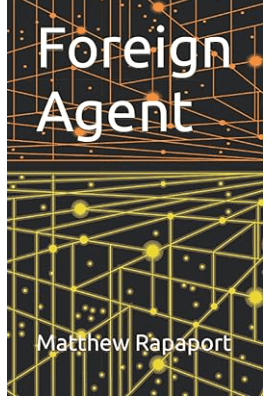
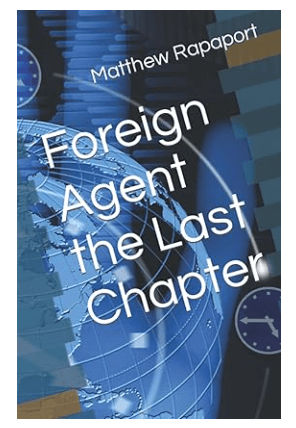
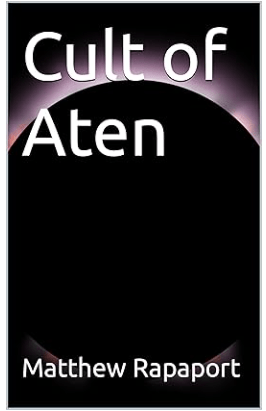
There are sex-related geopolitical implications in all of my novels. In the first novel, Foreign Agent, the Chinese plan to disrupt American social and political life by introducing genetically modified men and women who can deliver much more powerful peak sexual experiences than ordinary humans. In the second novel, Foreign Agent the Last Chapter, space aliens propose to pacify humanity’s militant inclinations with more and better sex than anyone—well, few anyway—is presently having. In Cult of Aten, novel number three, worldwide good sex precipitates international chaos because in many [actual] countries, sex, other than the minimum required to produce tax-paying citizens from a marriage explicitly sanctioned by the State, is literally illegal! In Indonesia, sex outside the bounds of a conventional marriage is a capital crime! In novel number four, LoveMe Inc., we discover that radically conservative women are conservative because they aren’t having sufficient—or any—orgasms!
In Brave New World, Huxley illustrates his new world’s failure to deliver endless happiness through a sexual union made, on the woman’s part, from habit, not desire—like much sex in the real world. Huxley’s mistake was failing to distinguish sex from good sex, especially for women. Like accidental pregnancy, this is a plot demand for Huxley. It does not burden my stories.
Does this mean I believe that good sex alone is the solution to the world’s strife? Of course not! My novels are ridiculous, clumsy satires, while Huxley’s, if not a masterpiece, has demonstrated staying power in the canon of English socio-political satire. But if good sex alone was not sufficient to cure the world’s ills, it would, I believe, make some difference. People would be happier, and happier people are more tolerant of others’ differences. No novel, however masterful, addresses everything required for human happiness, let alone global peace and prosperity. All art is an interpretation, some more faithful to perceived reality than others.
Brave New World is not faithful to reality except in its anticipation of conspicuous consumerism, cross-cultural psycho-social shock, and bigotry—the last two the ultimate themes of the story. Like Huxley, my novels are socio-political satires, but the first three anticipate nothing. The fourth novel does make use of a real phenomenon. Orgasms activate brain centers related to tolerance and compassion—The novel cites actual research. But I leverage this objective observation to absurd levels. In my hands, it is not a prescient theme but a plot point.
Huxley’s themes speak to real life. His satire is filled with irony, pathos, poignancy, loneliness, and false happiness. He is not, however, funny. Huxley’s world is ridiculous and physically impossible, but it serves as a stage for human social and psychological reality. The political nature of my satire is unmistakable, but my world is ridiculous not because of any physical impossibility but rather its psycho-social absurdity. Orgasms do not, alas, turn Republican women into Democrats! Would that it be so! Huxley’s characters react realistically to their world. My characters react unrealistically to our world. But for this reason, and unlike Huxley, my novels are funny!


 Ruminations