In this short paper my purpose is to understand how the word ‘qualia’, plural of ‘quale’, is used and to what exactly it refers. In addition I address the question of the phenomenon’s importance.
Qualia are associated intimately with brain states, and never occur in their absence. It is a fair bet there is some corollary brain state (sets of brain states) associated with every quale and the collection of them. It is also the case that, while normally associated with sensory apparatus, it is possible to invoke qualia, even a specific quale like “a flash of red light”, by “poking the brain” direct. What is mysterious about this is that poking the brain (or stimulating a living organism’s more conventional sensory pathways) does something that poking anything other than brains never does. It invokes, a “subjective experience” qualitatively different from the physical qualities either of the brain or of the source of sensory stimulation.
The sound of a middle-C note from a piano is a quale as is the different sound (thanks to harmonic frequencies) of the same note played on a violin. Each is a particular quale. What seems interesting is producing that note from either instrument, the motion of air molecules set up by the vibrating strings, and everything that happens between the instrument and the middle ear is mechanical. Mechanical energy converts to electrochemical energy in the auditory nerve and spreads in that form through the entire brain. From instrument to brain everything is uncontroversially physical and well understood. But what emerges, what is invoked by all of that physical process, a content of subjective experience, is not uncontroversially physical. It has qualities that none of the physical forerunners have. What is it exactly, and how is this possible in a physical universe of causal closure where physical causes have only physical effects? Those questions make qualia interesting.
In a sense, and this is only metaphor, it is as though a threshold is crossed. On one side a certain combination of purely physical (mechanical [hearing], chemical [taste/smell], electrostatic [touch], or photonic [vision]) energy (yes even the physical poking of a brain) is translated or transformed into a subjective experience whose qualities or properties share nothing in common (other than correlation) with the physical properties of their source. The mystery has nothing to do with the transformation’s necessary dependency on a functioning brain. Rather it is that this sort of transformation happens at all; that physics becomes subjective.
Sound, light, feel, smell, taste are all mind-dependent descriptions of phenomena, that in the mind-independent world are nothing but energy of one kind or another. If I say “I see light” we have always to remember that in mind-independent terms, there isn’t any “light”, only “electromagnetic radiation”. The latter is real and exists in the universe whether there are organisms with apparatus sensitive to it or not. Electromagnetic radiation only “becomes light” to a subject. Information bearing patterns in brain states are translated (mapped), via pathways beginning with sensory apparatus, into an “interior experience”. “The light” is that mapping!
The subjective gestalt is composed of qualia similar to the way particles of the Standard Model comprise the mind-independent world. The particles collect in special ways to form atoms while the atoms (sometimes in special states) aggregate to produce everything else. Some of the phenomena of the mind-independent world impinge on certain “biological sensors” associated with brains. Not all mind-independent phenomena impinge to trigger biological sensors. Neutrinos do not, nor photons outside a limited range of wavelengths.
The subjective arena is broader than qualia alone. Intentions, beliefs, emotions, memories, ideas, and so on are not qualia. Qualia comprise only the sensory modalities of the gestalt (and sometimes the effect of brain pokes). Unlike atoms, there are genuine mereological sums of qualia that is itself a singular quale.
The qualia arising most directly from our physical senses, “atomic qualia” like a particular red experience, sum mereologically to a unified gestalt experience, the sensory ingredients of the subjective arena of which we are conscious at any given moment. Nor at any moment is the arena an equal mix of all sensory impingements of which we are aware. If I am driving I am aware of the feel of the wheel in my hands, the pressure of the gas pedal on my foot, the sounds around me and the aroma of the hot pizza on the seat next to me. But I am, for good reason, focused on the visual scene in front of me. My gestalt includes all the sensory modalities of which I am aware, but as I focus my attention on what I see, qualia arising from sight dominate my arena in that moment.
The relation between separate sensory impingements is constantly changing but the effect, subjectively moment to moment, remains always singular. All this singular arena, taken synchronically, is also properly called a quale. By contrast, the mind independent world is particularized. Yes there are aggregates there, but they too are particular instances of their types. Planets and chairs are aggregates of atoms, but they remain, mind-independently, particular planets and chairs. That they are particular totals is recognized in the subjective interior thanks to the distinguishable qualia they invoke (via brain states) and their summation to the interior gestalt. The mind-independent world is essentially particular, while the subjective arena, under normal circumstances, is intrinsically unified.
None of this usage hangs on any particular theory of or philosophy of mind though it does implicitly reject eliminative materialism. It requires only that the word qualia refers to something, not nothing. That something, that to which we give the label ‘qualia’, is both the individual and totalized sensory modalities of our moment by moment experience. If, apart from qualia and besides intentions, thoughts, and so on, there is a “subconscious mind” and perhaps even an “unconscious mind”, there are no subconscious, let alone unconscious, qualia. A sensory experience isn’t a quale unless one is aware of it!
Qualia are nothing like examples of “emergent phenomena” one meets in the science and philosophy literature, for example the relation between statistical mechanics and thermodynamics. Statistical mechanics is about the motion (and density) of atoms; uncontroversially physical. Thermodynamics, temperature and pressure language, frames “another way” to talk about the same phenomenon. Mathematically, one can demonstrably map one into the other.
Qualia certainly rest on the “motion of atoms” (a synecdoche for simplicity’s sake), not only those that stimulate the sense apparatus, but throughout the brain. There is surely a causal relation here. Yet it is not obvious that “qualia language” is merely another way to talk about brain states. Not only has no one connected them mathematically, no one has suggested what the equivalence conditions might look like. David Chalmers, for example, speaks of “bridge laws”, but in several books on the subject has not suggested just how such laws would be subject to equivalency demonstration on either side of “the gap”.
The brain is a species of portal (a metaphor) made of the same stuff as all the mind-independent world. Some of the phenomena of the mind independent world are able to impinge on the portal in such a way as to invoke, a subjective viewpoint, qualitatively different from the electromagnetic, mass-possessing, stuff underwriting it; something, the subjective experience, that isn’t composed of atoms at all! Consider that my experience of red exhibits no third-party measureable quantity despite being the product, a mapping, of electromagnetic energy!
Of course the brain state correlate grounding the quale exhibits energy, even producing heat. But there is no physically measureable quantity on the subjective side of the portal! Brains translate, map, or convert energy of the mind-independent world into subjective experience which, as such, exhibits no energy utilization over and above that energy accounted for in the activity of brains; activity of atoms that hasn’t the slightest resemblance to its mirror on the other side of the curtain.
So why, as philosophers, should we pay any attention to qualia, brain states being obviously necessary and possibly (less obviously) sufficient for their appearance? Supposing we eventually learn exactly which brain states evoke every specific quale of the subjective gestalt, wouldn’t that constitute “knowing enough”? The problem is two-fold. First qualia do not have any of the measurable properties of brain states. At the same time, they do have properties of their own sort. If I ask a philosopher or physicist “to what does the word ‘qualia’ refer?” few would say “nothing”. But if not nothing, then what? My subjective experience of a color, or of my moment by moment phenomenal arena is not “made of atoms” even if it is a specific material organization, living brains made of atoms, whose activity is responsible for them.
Second, doesn’t this phenomenon smack of mystery “begging for explanation”? Why is the quantum mechanical “measurement problem” interesting? Why do we try so hard to understand what is going on? Something is going on about or in the “quantum world” that becomes counter intuitive when it emerges into the macroscopic. We’d like to explain how this transition works and why it comes out in the particular way it does. But we cannot and the most pedestrian of the fundamental reasons for this is that our instruments cannot get there! We cannot probe the quantum world directly. Why is the proton/electron mass ratio interesting? Why does it beg for explanation? Because it is unique and uniform. Every proton throughout the universe weighs the same as every other proton and mutatis mutandis for the electrons. It is that singular uniformity that makes the phenomenon interesting.
Why are these phenomenon any more interesting than qualia? First there is only one material organization in the universe, brains, that mediate between the impinging mind-independent matter-energy universe and a subjective experience of qualia? Second, like the quantum world, our instruments cannot get there! Even if we knew in every instance what brain states evoke what qualia we would be no closer to answering the question: how does physics become subjective?
Chalmers has pointed out many times that this brain state business might go on, like any other complex matter-energy interaction, without evoking a subjective mirror of itself. Biologists surmise that having a consciousness, and therefore a control (presupposing free-will by the way) over behavior beyond what is possible for non-conscious (automatic and deterministic) neural activity has survival advantage. Ironically, biologists have answered a why question. Physics produces the subjective because it has survival advantage! Surely this is so. But it gets no closer to answering the question how physics evokes a subjective? What makes it possible for physics to have that effect?
Every other matter-energy transformation in the universe, every other emergent phenomenon both begin and end with matter-energy. This includes what goes on in brains! And yet at the same time, and only in brains, there comes to be a “subjective viewpoint”, a phenomenon that begins with matter-energy, but does not end with it. Is that not enough to make it interesting?
I met an agent for Emanuel Cigars online. Her company is HERE. It’s a bit difficult to find your way to the cigar vitola and price list, but if you contact her she will send you a pdf of the list with prices. After looking over their product (see links above), I ended up buying two each of two of their cigars. You will notice two things about their product. First they have a lot of cigars, and second each cigar comes in four or five vitolas! What I purchased was their “Classic Premium” Petit Corona ($8) and the “Hemingway” Petit Corona ($10). These are not inexpensive cigars.
At this link you will find some more information about the company and their tobacco. The owner, Nelson Medina is I presume the blender, and he seems to know what he is doing. Both of these cigars were very flavorful. All Emanuel Cigars seem to be Dominican puros and come exclusively from farms in the North of the Dominican Republic; a place called the Cibao Valley. There is nothing on the website that says anything specific about the wrapper, binder, and filler. It seems not to be written for the aficionado who expects at least that much. So how do they smoke?
Classic Premium
Vitola: Petit Corona 5 x 42 ($8 retail) Wrapper/binder/filler: Dominican
Cold smell: Grass, flowers, faint barnyard, sweet Cold draw/taste: Black tea, some vegetal mushroom combined with a flower sweetness
Construction: Evenly packed if a little light. The wrapper a little rough, medium brown. After cutting draw was excellent throughout. Both of the sample cigars canoe a bit at the beginning, but a single correction takes care of it. Smoke output is nice and thick. Stays that way throughout the smoke. Both samples required a little correction here and there but I give them an “A” for construction on this one.
Strength: Mild to medium all the way through. This would be a good cigar for a casual smoke and for beginners. Will not overwhelm.
Flavor: Leather, flowers, warm sweet woodiness, nutty. No pepper to speak of on the taste until near the end, but there is some on the retrohale. The flavors include a certain meaty sourness that I find a lot in Dominican tobaccos. I don’t like it at all when it dominates the flavor, but here it mingles with enough sweetness, almost raw-sugar like, that it works. All the various flavors, even a cinnamon-like warm spice come and go throughout. The stick keeps its flavors until the nub. All good. Smoke time was about 50 minutes, about right for a small stick.
I think Emanuel has a winner here depending on what you think of that meaty note that pops in on every other puff. I’m not a big fan, but there are smokers who are attracted to that very flavor. There is a reason, after all, the Dominican Republic sells a lot of cigars.
Hemmingway
Vitola: Petit Corona Figurado 4.5 x 42 ($10 retail) Wrapper/binder/filler: Dominican
Cold smell: Manure, black tea, barnyard, grass Cold draw/taste: Pepper on the wrapper, barnyard
Construction: OK, figurados are harder to roll than parejos. This tiny one (both samples I smoked) was way too tight. The first was almost plugged. I had to use a draw tool, something tough to do on such a small cigar. The second had a better draw, but was still pretty tight all the way along by my standards. On both of these I had to cut off the little foot extension to get it lit. For what it’s worth, the wrapper, a dark brown, was smoothly applied, pack was even.
Once it got going I had to fight the first one all the way along. The second smoked better requiring only a little correction here and there. Smoke output was fine once fully lit, but had to pull at these a lot more to get that smoke. I can only give Emanuel a “B” for construction — well wrapped, even pack, way too hard to draw. I like figurados, but if you don’t do them right it doesn’t do any good.
Strength: Medium
Flavor: Again Mr. Medina seems to know what he is doing with tobaccos. There were sweet woods here, brown sugar, roasted nut, and even something like candied fruit in here. There is also that Dominican sourness I don’t particularly like, but as with the other cigar, it melds pretty well with everything else here alternating with sugary sweetness and diminishing toward the end of the cigar. Lots of flavors melding on the retrohale and pepper too. Again a very flavorful cigar if a little bit of a fight to smoke.
The first of these smoked only 37 minutes probably because I had to correct it a lot. The second was better, smoked straighter with but a little correction and lasted 47 minutes. For $10 I think these need a little more work.
—————
All in all, good flavors in both of these smokes especially if you like that “Dominican twang” as some have called it. Use the links above if you want to check out the company and try their smokes.
My interest here in this blog is mostly ontology, epistemology, philosophy of mind, and religion. I’ve paid little attention to how my own views of these philosophical sub-disciplines, particularly the last, impact (or should impact) the social, economic, and political worlds in which we live. In particular what are the social and political consequences in the present-day of the theology sketched here?
We live in topsy-turvy times in which political and social thinking has gravitated to extremes. In particular, among the many seemingly contradictory political and social (not to mention economic) ideas seriously taken by some is the idea that God would support, or can be invoked to justify bigotry and socio-political intolerance. I am careful to say God above because religion as a socio-political institution, physical churches, congregations, and so forth have (though not universally) often advocated political and social ideas that are obviously in opposition to “the will of God”.
There is nothing historically novel in this. The history of religious institutions worldwide is steeped in violence sanctioned by the institution itself. To be sure, in all of this history and within all religious institutions there were other voices, people who stood against institutional intolerance intellectually and in theory, though often having little effect on the social and political course of the institution. But that was then.
Violence remains today. In the Western world this strikes us as obvious about institutional Islam. The Quran is ambiguous as concerns treatment of “apostate Moslems” and non-Moslems. There is no such ambivalence in Christianity portraying as a Father of the individual and all individuals equally. This portrayal is unique in Christianity. Hindu God’s have only occasional and accidental relations to individuals. Buddhism rejects the reality of the individual itself and in its origins was the only one of the world’s presently “great religions” that was strictly speaking Godless. Islam and Judaism, occasionally speaking to the individual, are oriented towards a “God of the tribe”. Christianity (broadly speaking) is the only one of the three monotheisms to teach, without equivocation, that God is the Father of the person.
If God is the Father of the person, he must be the Father of all persons equally. The relationship of Fatherhood is direct and with literally every person on Earth (I think also with people living on planets throughout the universe). If God is infinite and unified his relationship to every personal being in the universe must be the same. The implications of Christian theology lead invariably to this conclusion and even more so the implications of the theology sketched in my Prolegomena linked above. God cannot care about the various political orders that characterize our world (“My Kingdom is not of this world”) though some are more consistent with personal sovereignty (especially as concerns religion itself) than others. Importantly we do not always know, though we always think we know, which are the better ones other than by viewing the life of their citizens over generations of time.
A “true Christian” has to believe that every individual is a “child of God” and should treat them as a sibling. That means Christians should not only be free of hate, but also support an international order promoting life as a brotherhood worldwide. This does not mean we can do away with the present, often hate-inducing political order. Not until everyone (or almost everyone) in the world accepts the truth of universal brotherhood. Today, even those who do accept this truth must sometimes defend, violently, their way of live against threats from those who do not.
The “true Christian” is not like the “true Scotsman”. A Scotsman is one who is born in Scotland. Being born somewhere has no necessary bearing on any other aspect of individual character. This is not the case with a “true Christian”. Being a “true Christian” has nothing to do with national, cultural, or social identity; with where you are born. A person is not born a “true Christian”. A person becomes a “true Christian” by freely accepting and acknowledging, and not merely theoretically, their individual relationship to God the Father through Christ. One cannot be a “true Christian” without accepting, by an act of one’s own will, the actual and not merely theoretical relationship to God, of all persons on Earth. It is not enough merely to be a participant in the institution of the Christian church!
Equality as a person before God does not translate into equality in any other respect. The American declaration of independence’s assertion, that “all people are created equal” is misleading. “Nature and nurture” both ensure that people are not equal in any way other than their relationship to God. But if we are all equal, even in only that one way, we must therefore be related to one another as siblings in a universal family. It is logically inconsistent to assert that you believe in a universal God, and not accept that every person on Earth is a brother or sister. In particular, in the Christian interpretation of this relationship, what is asked of the believer by God, is that they love their siblings! Every person is a person no matter what their race, nationality, sexuality, economic status, and so on. It should therefore be logically impossible to be a xenophobic, homophobic, racist, or nationalist Christian!
Yet if all of this is so, how is it that today, in America, religion is used as a political and social tool in support of a xenophobic, racist, nationalist, and otherwise intolerant right-wing agenda? How do millions of people who declare their belief in a universal God come to support political agendas that are plainly intolerant of individuals for reasons having nothing to do with their personal relationship to God? How do millions of individuals who claim to believe in a “Christian God” come to hate classes of individuals who are obviously persons and so related to God in exactly the way they are?
There are many reasons in the end all resting on the psychology of individuals. Socially, and at its extreme, this psychology can be manipulated to result in a literal depersonalization (open or hidden) of individuals in the despised group; literally coming to believe they are not people. But my focus here is on the role (having an influential bearing on the psychology) of the distinction between religion as that orientation towards one’s individual relationship to God (and by extension all other individuals) and religion conceived as an institution, a church, or as an individual relation to such an institution; being a member of a church. Notice that being born into a Catholic family doesn’t count here. There are many such individuals who are atheists or have elected a religious path other can Catholicism. What counts is what an individual, at sometime in their life (perhaps many times) chooses.
This is not to say the “institutional Church” and the “will of God” cannot be aligned. In “Origins of the Political Order”, Francis Fukuyama credits the Catholic Church with the founding of “rule of law” in Europe. A transcendental God grounded the idea that kings, popes, and peasants, all “equal in the eyes of God”, should be subject to the same rules. That God’s law covered all was accepted in theory beginning in Roman times. God’s law, not its interpretation but the fact of it, aligns the institution of the Church, and the “will of God” as understood by a modern theology. Fukuyama notes that only cultures having a “transcendental religion” (Christian, Hindu, Moslem) ever developed the rule of law idea. China for example, where neither Confucianism nor Buddhism is transcendental, never developed the idea that political elites should be subject to the same rules as everyone else.
The Protestant Reformation changed the view of whom may legitimately interpret Christian (Biblical) teachings, but not the basic insight that all individuals are equally loved by God. Fukuyama again credits the Reformation with the relatively rapid development of democratic accountability in Denmark, Sweden, and Norway. Why? Because the requirement that each individual become his or her own interpreter of the Bible drove the Church to make the entire population literate, peasants included! But Protestantism did reintroduce another idea in conflict with this universality and that became the seed of the present contradictory relation between some Christian institutions and God’s universality. Virtually all the present American “religious right” are Protestant of one sort or another.
Certain Protestant denominations began to connect material (economic and social) success to “being favored by God”. This belief also influenced the Hebrews of Jesus’ time despite the Old Testament’s “Book of Job” explicitly rejecting any such idea. The Hebrews ignored the lesson of Job as do modern Protestants, but the problem goes deeper than the merely economic. The conflation of spirit and economic success leads to the idea that some individuals are favored by God over others and this begins the slippery slope from economics to social intolerance. If God favors certain individuals, he must withdraw favor from others and from this a small step to justified bigotry!
Human emotions and attitudes about the humanity of others (their worthiness as brothers) range from the inclusive to the outright exclusion of everyone not a member of one’s favored group. Of course institutional religion is not the only source of bigorty. There are atheists on both the political left and right. But if, given any leanings to bigotry, one joins in the activities of a physical church whose members are also intolerant, then religion, creedal dogma as taught to, and accepted by, that congregation, can justify bigotry on grounds of Biblical interpretation. Is every such teaching in direct conflict with the universality of God’s love as taught by Jesus? Yes it is, but some Christians (and Protestants are not alone here) become convinced that “universal love” applies only between the members of the “in group”! This is a false teaching but we find it everywhere reinforcing existing prejudice.
What about religious-institutional support of international conflict? How many times do we hear religion invoked in service of “the nation” and in opposition to other nations? Much money flowed from Irish Catholics in the United States to the IRA, overtly supporting Irish terrorism in the 1970s. In the present-day the world is divided into nations some of whom emerged over centuries, while colonial powers, the older nations, cast others together. The problem with the present order is that each nation represents itself to the world as a sovereign entity having rights to global resources. But the world’s resources are limited and if through disproportionate economic or military power one or a few nations act to pull resources towards themselves leaving other nations, their people, with too little.
Part of the problem over all is the number of people trying to live on the world, but this is not a problem any subgroup of nations can solve. More than half the world’s nations are demographically aging. The rest have more youth than can be productively employed at least under present political and socio-economic conditions. In today’s global environment, it is fundamentally bigotry that prevents rational, voluntary redistribution and retraining of excess population from one part of the world to another.
To the bigotry directed at people down the block or in the next town is added the bigotry of nationalism. Nationalism is the idea that not only do the people of my nation deserve a proper share of the world’s resources (morally defensible depending on the share), but it is also a nation’s right to set those standards for itself and to take, or preserve their self-determined share by force of arms if necessary. In today’s world this is nowhere better illustrated than in the South China Sea. A dozen nations should be sharing resources claimed more or less exclusively by China. Modern wars between nations are always about resources in one-way or another even if resources are not always a war’s immediate trigger.
In modern times, nationalism is the disease that leads whole peoples to war. Like bigotry, nationalism need not connect up to religion. But as with bigotry, [some] religious institutions support nationalism on grounds the people of some nations are favored by God while others are, if not condemned, then less worthy. The logical contradiction between nationalism and the demands of religious universalism is identical with that between universalism and bigotry based on ethnicity, sexuality, and so on.
So we find ourselves a culture in which [some] religious institutions come to be in opposition to religion as such. They teach false doctrine, the “white race” or “straight people”, or “Americans”, are the “children of God”. The broader Church should publicly distance itself from intolerant or nationalist congregations unless it too bears false teaching. Too often it does not. Certainly not in Islam, but also within some Protestant communities in the United States and around the world. Those false teachings have come to be widely enough accepted that condemnation by the remaining universalist members of the community would result in serious economic and social dislocation for the wider Church. Here the social and economic realities of a material institution come to conflict directly with its spiritual mission.
I speak here largely of the cultural milieu in the United States. In his recent (September 2018) “Like a Thief in Broad Daylight” Slavoj Zizek notes that in Europe this overt conflict between Christian Universalism and intolerance manifests less in Christian intolerance than in a retreat from Christianity back to paganism! On one level this makes sense. There is no logical contradiction between bigotry (or nationalism) and paganism, but paganism doesn’t help craft solutions to what are very much planet-wide problems. It lacks, among other things, any global value compass.
This then is the negative side of our present. There are religious institutions that falsely link God’s love to a particular subset of individuals whether a race, nation, or other distinction in social identity. What then is the positive side? What politics, what political order should religious institutions support? What political order would be consistent with the universality of God’s love for every individual?
Begin with the sociological end point of such a world. What must God want? Some part of this can be easily drawn from a first principles theology. Every individual on the planet would love and treat like a brother every other individual with whom they interact directly or indirectly. They would do this of their own free will because they know that God loves each of them and that loving one another is what God wants us, freely, to do. When you love someone, you want to do good to them. Loving God is no different, but there isn’t any good we can do to God directly. He is infinite and complete. He needs nothing from us. What he requests, seemingly, what would be “good to him”, is that we freely choose to love his other children, our brothers.
Love here is not some abstract notion, but manifests in well motivated executive administration, economic fairness, and so on. The problem is not Capitalism as the left continues to insist. The problem with Capitalism is the capitalist who is not yet motivated to act fairly and preserve a level field for all. True, today, no one or even a few capitalists can act against the tide without suffering competitive disadvantage, but this will not be the case in the future when capitalists view their mission first as service to the global community and only secondarily in profit terms.
Obviously such a spiritually advanced world would have no bigotry, no crime, and no war. It would not merely suppress their exhibition, there would be none to be exhibited! For this to happen, even to approximate it (for example a war-free world in which not literally every person loved every other, a world in which there might, for example, be some criminal behavior), the peoples of the world would have to view themselves as “people of Earth” as well as members of other subpolities.
The division of executive powers in the United States serves as a good analog. The people of Iowa think of themselves as Iowan, but also as Americans. The Federal government controls the armed forces, and regulates trade between the States. Iowa, despite having a “national guard”, does not scheme to take land from Nebraska. At the same time, the existence of the Federal administration does not obviate State governments any more than State governments obviate county and city governments. All these levels of government are needed for the administration of a large polity like the U.S.
A world without bigotry demands the free-willed transformation of individuals, billions of them. But there are not billions of national governments with armed forces of their own, only a couple of hundred. To achieve a war-free world, even long before individual bigotry, crime, economic unfairness, and other socio-political problems disappear, it is necessary only that armed forces of all nations be given over to the control of some supra-sovereignty that encompasses the planet. In short a world government. Such a supra-sovereignty would not only control all the world’s armed forces, but also, like the U.S. Federal government regulate relations between nations. There would still be need for national and subnational polities, States or provinces, local governments, and so on.
Nations claim a sovereignty that is a fiction. They can be attacked physically, digitally, and economically. Their currencies can be debased not only by bad decisions nationally, but by decisions taken in other nations! By insisting on the national right to sovereignty war between nations is periodically certain. International relations between national States with armies are inherently unstable because no entity exists that can allot resources between them.
If a world government existed, there would be no one left to fight, no “national currency” to devalue. The world-government would be genuinely sovereign. This being the case, why would any need for “armed forces” remain? The reason has to do with the process of getting from where we are now to a fully sovereign world government. There will come a time in which most of the world does vest control of trade relations and armed force in a supra-sovereignty, but there remain nations with their own armed forces who might refuse to join.
This is no different from the early times of evolving national organizations from smaller polities who used force of arms to resist (ultimately unsuccessfully) emerging national polities. Older and less inclusive social organizations, bands to tribes, tribes to limited states, limited states (even cities) to larger states, have always resisted and still resist the evolution of wider polities.
Once the entire world is genuinely on-board, once it becomes unthinkable that a nation, small group of nations, or collections of individuals, would raise their own armies and seek to break away from or resist belonging to the world government, then need for any international armed force fades. Eventually even police forces also fade as individuals of the population advance further towards the social endpoint.
The question posed above was: how is it that today, in America, we have a situation in which employs religion as a political and social tool in support of a xenophobic and otherwise intolerant right-wing agenda? I have not concerned myself with bigots and nationalists who are not also religionists. As with paganism, there is no logical inconsistency between atheism and nationalism even if the latter remains a bad idea and always, eventually, leads to war unless nationalistic leanings are curbed before war grows imminent.
Nor is it necessary for religious institutions to address politics directly. A “religious institution” may abjure politics altogether. Of course the institution’s participating individuals are immerged in the politics of their locale as well as the nation-state. Churches (congregations or taken more broadly) have in theory only a spiritual mission, to help the individual believer to understand and freely choose to do God’s will, which at the cost of repetition can only be to love one another.
Because individuals are political, politics always affects the relationships between individuals in any congregation, and their ministers are no less immune to this effect. If a side must be taken, that side most aligned with God’s equal love for all, the side that most treats everybody involved like a brother in a loving family is the only choice consistent with God’s universality. Any church that, having taken a side, takes the side of intolerance and isolation, of nationalistic “us vs them”, that does not say to its members “go and love them also”, is from the viewpoint of the “spiritual mission”, in contravention of the will of God!
But if Churches can, in theory, ignore politics, if they can ignore nationalism, they cannot ignore individual intolerance. If the institution’s mission is to teach love they cannot support, even covertly, intolerance between any class of individuals. Our present situation regarding institutional religion is ultimately the result of the failure of those institutions to stick to the mission of teaching that God’s love is universal.
So what are we to do about this? From the viewpoint of alignment with Deity, it is never wrong to continue the mission as best can be managed in circumstances. Become an institution or take part in an institution that respects the relationship between man and God and so man and man. Is that going to solve our problem here? Is that going to convince religious institutions now on the wrong road to change their path?
History does not bode well for any such optimistic outlook. Intolerant people who yet think of themselves as religious will gravitate to congregations of like-minded individuals. Values reinforcement is an outgrowth of congregating (religious or not), and not limited to reinforcement of positive values. Any student of history will cite many examples down through the recorded centuries lastly ending in the stance the Hebrew Sanhedrin took on Jesus. With everything else Jesus is the quintessential demonstration to the universe that once history has set a course, once enough men are willfully and in concert arrayed against love, no amount of the Father’s love will prevent the socio-political disaster at that point made certain. Forty years intervened between the death of Jesus on the cross and the Roman destruction of the second temple. Jewish nationalism, already plain in Jesus time and a factor in his persecution, made the event of the final destruction forty years later certain despite the voices of universalism in the expanding Christian message [see note below about Paul].
There are now, in this world, more than enough of the intolerant and hateful, religious or otherwise, to have set the historical course for the next few decades, perhaps a century or more. It might yet be another thousand years, or five thousand, before enough people wake up to the reality of the need to take the compass given by values seriously. But if the message is not carried through that interval, there will be nothing to awaken to. I do not know if the progressively polarizing world will result in another global war, but some global catastrophe, ecological or economic, probably both, is going to sweep over the human race in the next hundred, or maybe only twenty, years.
Will the human race extinguish itself? No, unless possibly the disaster becomes global thermonuclear war. Will the promised land of love manifest after this next global catastrophe? Not likely. There will be yet something else, and then another disaster, and so on, until such time as a true global government evolves. Only then will conditions make the further evolution of universal brotherhood possible. Only one thing can be said with certainty. God’s will, the evolution of universal love on this and every other world, must eventually, in some distant future, come to pass.
Note: If anybody, Paul set the stage for the Western conflict between institution and universal relationship by aligning his version of Jesus’ message with the existent Roman “Cult of Mithras”, the largest institutionalized “Roman Church” of that time. That institution became the Catholic Church and for the sake of secular power, the message altered from the brotherhood of all human beings to the brotherhood of Catholics.
The domains once known as Christendom have long been steeped in civil violence and warfare, and even occasional acts of genocide. The scourge of war also pervades our earliest scripture. One is shocked, for example, to learn that Jahweh calls for ruthless warfare against Israel’s neighbors, epitomized by Joshua’s campaign of virtual genocide against the previous occupants of the Promised Land. Many other stories of armed conflict are found in the Deuteronomistic History. The Hebrews were frequent aggressors, but they just as often were overrun by neighboring empires. The hapless Jews fought internecine battles as well. In Exodus, Moses orders the execution of 3,000 followers because of their idol worship (Ex 32:28). And, during the harsh period described at 1 Kings 15, for example, Judah and Israel engage in an ongoing vicious civil war, with competing religious ideologies at stake.
Pre-modern Christian institutions followed a similar pattern in the name of the Christian God, sometimes called the Prince of Peace. Christian leadership fomented the crusades, the Inquisition, and the witch-burnings. During the Reformation, Catholic fought Protestant in decades of devastating warfare. In modern times, two great world wars were waged by nominal Christian nations against one another. In the U.S., almost all Christian denominations supported the War in Vietnam until Martin Luther King denounced it, and only a few church groups aggressively opposed several dozen other military interventions and the more recent wars in the Middle East.
In many of these cases, points out scholar Robert J. Daly, the combatants exceeded the boundaries of “just war” theory, while still feeling themselves to be acting consistent with Christian belief.[1] Daly suggests, and I agree, that bad theology and mistaken beliefs about God lie behind such violence—at least in part.
If indeed there is such a correlation, one source of this mistaken theology seems fairly obvious. The theological error that offers the most ideological support for structures of violence down through the millennia is Paul’s atonement doctrine, which was in turn a logical extension of the sacrificial and purification rites of the ancient Hebrews.
Here, for example, is a characteristic statement of this teaching [bold emphasis mine]: “[We] are now justified by his grace as a gift, through the redemption that is in Christ Jesus, whom God put forward as a sacrifice of atonement by his blood, effective through faith.” (Rom 3:23–25) Throughout his epistles, Paul points to blood atonement as a core meaning of the cross, offering along the way a wide array of creative metaphors and rhetorical devices to support the idea.
The Pauline idea of blood redemption pervades the Gospels as well, where we read for example that Jesus “gave his life . . . as a ransom for many.” This stark idea can be found at Mark 10:45, who we now know in part based his Gospel after the writings of Paul. Matthew quotes this very same line at Mt 20:28, most likely copying Mark. We find blood atonement ideas in John as well, though much less so in the Gospel of Luke
The general atonement concept, especially as abstracted from Paul’s writings and elaborated by his successors, amounts to the idea that God deliberately intended Jesus’s violent death. In its most extreme form, Jesus’s sacrificial death (and his victory over death by resurrection) was seen as being planned by God from the beginning of time, or at least from the time of Adam’s default. Later theologians extended this idea into a crystallized dogma, especially in the West.
In his masterful book on the atonement idea in Judaism and early Christianity, Stephen Finlan calls the doctrine “crazy-making theology.”[1] For, if your God demands violence—if atGod’s level certain acts of brutality are sometimes necessary—we humans can feel justified in engaging in violence at our level.
“No wonder there seems to be a widespread tendency to take violence for granted in human affairs,” laments Daly.[2] After all, we are to imitate the ways of our God, but must we mimic a God who demands the bloody sacrifice of his only son?
Defining the Doctrine of Atonement Classic atonement theory can be understood as God’s “honor code.” God is in charge of all power transactions with his creatures, governing their behavior as a matter of divine honor. Each time collective human sin or some other offense damages or offends God’s sense of honor, a payment to restore God’s favor must be made through a sacrifice or some form of purification. Otherwise, sinful humanity will be subjected to a divine verdict against it, and must undergo a serious punishment. For example, in Genesis, God had to make humanity as a whole pay for its corruption through a great flood (Gen 6–9). Later in the Hebrew history, sacrifices and purification rites became essential features of cultic practice, and they often entailed extreme violence. In Deuteronomy 3:13-16, God commands that if a town worships idols, “you shall put the inhabitants of that town to the sword, utterly destroying it and everything in it—even putting its livestock to the sword. All of its spoil you shall gather into its public square; then burn the town and all its spoil with fire, as a whole burnt offering to the Lord your God.” [Emphasis mine.] In other words, the destruction of the town is a sacrifice, a burnt offering that honors God and induces him to restore his favor. The payment of the sacrifice also functions like a propitiatory gift to God.
[1] Stephen Finlan, Sacrifice and Atonement: Psychological Motives and Biblical Patterns (Fortress Press, 2016), p. 120.
Other examples of this kind are common in the Old Testament. At Samuel 21, God sends a famine on the land, then tells David that it has occurred because “there is bloodguilt on Saul.” God ends the famine after seven of Saul’s sons are “impaled . . . before the Lord.” Only then does God lift the blight.
According to Finlan, “Costliness was necessary to the sacrificial gift being effective.”[1] Paul grew up amidst the sacrificial cult of Jerusalem as a Pharisee, and he instinctively understood this equation. Paul must have reasoned that, if humankind as a whole was to be saved, a very expensive transaction was needed as a payoff to expiate its sins once and for all. Otherwise, why was an uneducated Galilean—a powerless man who had been crucified like a common criminal—appear to him as a risen savior? Why else would this marginal person have to die such a cruel death, only to be resurrected?
The most effective payment Paul could imagine would be for God to offer up, as a sacrifice, his only Son. Jesus, as God incarnate, was a large enough offering that he alone could propitiate God’s violated honor. In other words, Jesus’s death was deemed a sacrifice that was sufficient to permit God to reconcile sinful humanity to himself, and thereby create a new covenant with all humanity. Jesus’s suffering was needed to save us, for God’s love alone cannot save us.
Doing Away with Bad Theology
Today many of us believe that the doctrine of the atonement through the shedding of Jesus’s blood is entirely erroneous, truly an embarrassment. How can it be consistent with Jesus’s idea of God as a true and loving Father? In effect, this doctrine teaches that God’s infinite love is secondary to a requirement for a sacrifice to appease him for man’s offenses.
No wonder these crude ideas get downplayed once a mature Trinitarian theology evolved in the fourth century. “Such inner-trinitarian tension fails to appropriate the insight that, in sending the Son, the Father is actually sending himself,” says Daly.[2] In other words, the idea of atonement is not only barbaric, but is also a monstrous logical contradiction. It is most unfortunate that this primitive notion—that Jesus’s death is a divinely ordained ransom—gets mixed up with Paul’s other insights, many of which were brilliant. Among these is what might be called Paul’s “cosmic iconoclasm,” in the words of biblical scholar Brigette Kahl. The revelation of the risen Christ on the Damascus road, she says, exploded Paul’s universe. He will never again see the old world he once inhabited, and is blind for three days. Paul eventually realizes that God had “changed sides,” shattering the prevailing images of a divine order that, in Paul’s immediate experience, included
[2] Daly, p 50. He goes on to say: “It might be seen as a battle between the idea of Incarnation and the idea of atonement/sacrifice. . . . What would happen if we were to remove the idea of atonement? The vibrant Christianity of the East that, although founded on the same biblical and patristic origins as that of the West, based its theology of salvation . . . much more on theologies of theosis/divinization rather than on Western-type atonement theories.”
Hebrew accommodation to Roman rule and its pagan state religion. All around Paul were images (statues, coins, and temples) that depicted Caesar in the role of the universal Father, or pater patrie. Conquered peoples like the Jews must pay tribute to this deity, submit to unjust Roman law, and even permit Roman surveillance of their most sacred rites. As Paul sees it, the God of the risen Christ carries out a great reversal. Those who were once the enemies of this false idol of empire, the oppressed subjects of imperial rule—both Jew and Gentile—now have a much greater God who favors them instead of the rulers. The great revelation to Paul portrays to him a God of justice and mercy for all, the true universal Father. This is the original God of Abraham. This was that God who before the Law was promulgated by Moses, only requiring a simple faith. This revolutionary insight leads Paul to declare that Jew and Gentile alike are now liberated from both the Hebrew Law and the Roman oppressor through the love of God through Christ. Jesus died to rehabilitate those at the bottom of the social hierarchy, who have immediate access to the Kingdom and are justified in God’s eyes by simple faith.[1] I would only add that this picture of Christ’s work on Earth is the kind of inspiration we need today, once we leave behind the bad theology of Paul’s mistaken atonement concept.
As I noted at the top of my Amazon review (see inclusion below), Hogan’s “Austere Realism” and Graham Harman’s “Object Oriented Ontology” are, near as I can tell, exact inverses of one another. Harman’s view is that everything is real, everything is an object. Every star, planet, building, book, nation, thought, and all their relations, a virtual infinity of relations between everything and everything else taken individually and in sum. “All objects”. Horgan’s view it the exact inverse. For Horgan there is only one ontologically genuine concrete object in the universe, that being the universe taken as a whole, across all time, what he calls “the blobject”.
Both theories, in their own way, amount to saying the same thing. Whether “all is one” or “literally everything is an object”, both declare that “everything is the same”. On a strictly ontological level, there is no distinction to be made anywhere. This is not to say that the two theories say the same thing, not at all. But because they are both at the extreme ends of the metaphysical spectrum they both collapse all distinction and end up explaining nothing.
Horgan doesn’t mention Harman; not in the book nor the copious end notes. None of Harman’s books are even listed in the bibliography. I am surprised. Although the polar opposite of Horgan’s ontology, I would think the common feature of “being at the extremes” of ontological speculation would be worth a mention. I have dealt with Harman in several book reviews and essays here on the blog. Now it is Horgan’s turn.
In my review I do point out that Horgan’s book has two purposes; to set forth his “blobjectivism” and to show how, even if there is but one concrete particular in the universe (the universe itself) this idea is perfectly consistent with talk about a multiplicity of objects. “The United states dollar is the primary reserve currency on Earth” is true even though “the United States”, dollars, currency, and “the Earth” do not strictly exist. The same is true for more purely physical assertions. “Mars is the fourth planetary orbit outward from the sun” is true though there is no Mars, planets, orbits, or the sun. These statements can be true because their truth lies in semantic contexts that only “indirectly correspond” to some as yet unspecified phenomena of the “mind-independent world”, something both Horgan and Harman must accept as real or they wouldn’t be “realists” at all.
It is the social construction of language and so the presence of varying semantic contexts that make such statements true. They are true not because the things they purportedly reference (planets, money) exist, but because they meet the semantic standards of speech concerning posits about distinctions that exist only in a mind-dependent way. This connection between ordinary speech and ontology is a nice touch, but what is it about these “pseudo object posits” that makes them unreal ontologically speaking? Horgan points to vagueness (which he also calls boundarylessness) and the “Special Composition Question” introduced by a short detour through the work of Peter Van Inwagen. Much of this Horgan illustrates with what philosophers call “sorites problems” the most famous of which (and perhaps because of this Horgan doesn’t use it) is the “ship of Theseus”.
Theseus has a ship made from wooden planks. At some point one of the planks rots and must be replaced with a new piece of wood. Is it still the same ship? What if two planks are replaced, or ten, or all of them? Somewhere along the process some people would say that it is no longer the same ship though others would disagree. But the point is there is no definite point where the replacement of just one more plank makes a different ship. This observation suggests that the ship of Theseus (and most everything else) is vague and it is an axiom of Horgan’s ontology that “vague objects” do not actually exist as such. There is no such object as “the ship of Theseus” even though Theseus (who also does not exist) is plainly sailing in something.
The “special composition question” is related to this but has to do with what is and is not a proper part of a larger construct. Does a chair (some chairs) have parts? Does it have legs, a back, a seat, and perhaps arms? The chair is subject to sorites issues; if I remove a leg and replace it with another is it the same chair? But also we notice that legs, arms, seats, and backs, not to mention chairs, are all made of atoms. Perhaps the only real parts of anything are the atoms. A chair (Van Inwagen’s famous example) is nothing but “atoms arranged chair-wise”. It has no other proper parts because they are all merely atoms arranged leg-wise, seat-wise and so on.
So what does Horgan say is the chair in the mind-independent world? He says it doesn’t exist. It is not a “proper part” of the universe. Instead, what he believes, is that the blobject, the whole universe just is in some particular spatiotemporal location arranged chair-wise. Instead of a composition from atoms on up, the key insight for Horgan is that the differentiation goes from the top down. The mind-independent “whole universe” happens to be differentiated into everything that we take to be mind-independent about the world and according to Horgan (he is explicit here) this differentiation is both real and precise; not vague.
Yet, since the blobject is differentiated into something or other not-vague (chair shaped, rocks in orbits, suns, gas clouds, radiation) literally everywhere, and all of these differentiations have effects (gravitationally or otherwise) on other differentiations around them, how is saying what Horgan says any different from saying that all of the differentiations, taken mind-independently, are simply real objects with a genuine compositional structure? If the blobject’s everywhere differentiations are not vague, where comes from that vagueness he uses to insist that suns, rocks, gas clouds, and chairs don’t really exist? If the blobject differentiates precisely and the differentiations are mind-independent, the vagueness can only come from what is not mind-independent, namely the machinations of mind both pre-linguistic and linguistic!
The problem comes fully around to bite Horgan when he speculates on mind itself. If there is mind in the universe, the blobject also is differentiated spatiotemporally into minds! Mind itself, our phenomenology taken as a whole (Horgan suggests) is also a differentiation of the blobject and for that reason precise, though the contents of any given mind, for example propositions, can still be vague. But even with this little escape for vagueness’ sake, Horgan seems committed to mind-independent mind!
This result does not appear to have given Horgan any pause, but I think it is enough to show that there are difficulties with his view he does not address in the book. In the end philosophy is always trivially right when it takes positions at the extremes of ontology or epistemology. One cannot in the end refute a pure idealism, nihilism, solipsism, or a realism that says, one way or another, that “everything is the same”. In the end Horgan is not wrong. Nor is Harman. But Blobjectivism, like Object Oriented Ontology, is a difference that makes no difference! As concerns the “mind-independent world” saying everything, including all properties, are localizations of the blobject is the same as saying that all the localizations are real and exist. As goes ontology, Horgan (though not Harman) need not worry about baldness, nations, money, or even language since none of these phenomena are strictly mind-independent.
Interestingly this book is a counter point and the ultimate theory is exactly the inverse of Graham Harman’s “Object Oriented Ontology” (see my reviews of various Harman books). Ironically, the universality of their views cause both philosophers the same problem. If what exists is univocal (everything is an object [Harman] or there is only one object [Horgan]) you explain everything while explaining nothing. However delving into such philosophical matters is not the purview of a book review and I will talk more about this in my blog. Meanwhile, one of my criticisms of Harman is that he never really tells us why or how he came to his position, a complaint I cannot level at Horgan as that telling is the very purpose of this book.
Horgan first introduces us to realism in general and then austere realism. He spends roughly one third of the book (at the beginning and again at the end) characterizing austere realism and in particular his version of it, something he calls “blobjectivism”. Roughly two thirds of the book he spends not on his ontological theory as such but on how that theory relates to statements in ordinary and scientific discourse. If we want to say that planets, stars, buildings, and nations do not exist, how is the scientific statement “Earth occupies the third orbit outward from the sun” or the economic observation “the U.S. dollar is the world’s primary reserve currency” true? He says such statements are true not because the “objects” they purportedly name exist, but because talk of these categories only “indirectly corresponds” to the mind-independent world. The indirection goes through the process of conceptualization.
Much of the book is an exposition of this process works; how it is that many statements in ordinary and scientific discourse can be true even though the objects they purportedly talk about do not really exist. His direct argument for their non-existence has to do with vagueness, what he also calls the boundarylessness of discursive subjects, and the related “special composition question”. In stipulating a mind-independent world he also stipulates that no mind-independent object can be vague or boundary-less. Vagueness can always be made to look inconsistent. He gets into this issue by introducing what philosophers call “sorites problems” (take a man with 5000 hairs on his head. If I take away 1 hair is it still the same man? And this is only the beginning of a sorites problem). Anything we might call “an object” within the universe is subject to this sort of breakdown. Horgan insists that this being so, none of these postulated things exist in the mind-independent world. Objects of the mind-independent world cannot be intrinsically vague.
Horgan slides between mind-independence that cannot be vague, and discourse following general and not-fully-specifiable linguistic standards (themselves vague), to what he calls the vagueness of linguistic posits about the world. The problem here, the problem Horgan doesn’t seem to see, is that all the vagueness is mind-dependent. There isn’t any vagueness about the man with 5000 hairs in the mind-independent world. The vagueness enters only when mind directs itself at analyzing the concept of that man. Horgan is quite correct I think in that all that is mind-dependent is vague. I believe this is necessarily so, though Horgan does not (and says so). Nevertheless these indirectly corresponding posits cannot be real though propositions about them can still be true. Besides introducing us to the blobject, the point of the book is the [mind-dependent] connection between Horgan’s ontology and the correctness of ordinary talk thanks to semantic context and indirect correspondence.
To my mind, Horgan fails to appreciate some of the implications of his ontology. For him, the stuff of the mind-independent world are not parts of something greater but rather spacetime localisations, differences, of “the one concrete particular that exists”, the blobject. If this is the case, and he says this, these spatiotemporal localisations must be precise, not vague! There are many issues arising here I will leave for another venue (see my blog), but the bottom line is that if they are not vague we might as well call them objects! It isn’t that Horgan is wrong (let’s say). It isn’t that ontology cannot be as austere as he claims. But it doesn’t matter. Giving an inch here is worth a mile. If spatiotemporal variations in the blobject are real and precise then conceptualizing those variations as objects, saying “they exist” and “directly correspond” (in Horgan’s semantic scheme) to mind-independent particulars amounts to saying the same thing.
Still all in all Horgan does a great job putting this together. I gave the book four stars not because of philosophical issues but because Horgan’s writing is not as clear as it might be. There are many long sentences with multiple and parenthetical clauses. Sometimes his argument is a little difficult to follow. But what was worse, the Kindle version of this book (the version I have) has a serious problem! This is not the author’s fault. The publisher was way too casual with this conversion. There are a lot of end notes in this book. A considerable amount of detail in the author’s exposition is in the end notes! But while the notes are flagged in the text, flags are not made into links. You cannot press on an end note and go to the note as as is conventionally the case in most of the Kindle books in this and other non-fiction genera. Such features are, after all, part of the point of e-books! This is a serious omission in a scholarly work like this, and makes the whole, if you really want to see the end notes as they come up, way more difficult than it should be.
Here are two reviews of books by Francis Fukuyama in which he traces the evolution of political orders from prehistoric times to the modern day. His point is to demonstrate that all human societies, growing larger, must solve common sorts of problems no matter where in the world they are. In these books he carefully describes how these solutions come out in political orders of vastly different types. He is also interested in what and how factors contribute to both the similarities and differences in the present political orders on Earth. These factors include geography, climate, foreign contact, ideas, economic activity, technology, external and internal conflict (war, civil-war, revolution), and ideas, especially the presence or absence of a culture-wide transcendental religion.
In another book,“The Shield of Achilles” 2011, Philip Bobbitt looks at the political evolution of Europe (to which Fukuyama gives much but not exclusive focus) and argues that the evolution of modern European states was very much a product of war and evolving military technology. In large measure Fukuyama agrees with this (especially as concerns Europe) although he suggests that many other factors are also important. Bobbitt distinguishes between four evolutionary stages beginning with Kingdoms in the medieval, and proceeding, in different places at different times and at different rates, through Kingly-States, State-Nations, to Nation-States. Fukuyama’s view cuts across these distinctions tracing the development of his three pillars of the modern political order (not any of them represented in literally everywhere on Earth in the present day) state-bureaucracy, rule-of-law, and upward and downward accountability. It is not the presence or absence of any of these that distinguishes the political orders described by Bobbitt, but rather the particular forms, especially the bureaucracy, taken in each place at various stages of history.
Bobbitt seems most interested in what he believes comes next in political evolution, the Corporate-State, something he notes is well underway in the United States, China, and in other places again evolving in different ways and at different rates. But what Bobbitt sees as a next step in political evolution, Fukuyama sees as “political decay”. The fundamental purpose of a State is to provide services that benefit the entire population as much as this should be possible. Such things as public school, medical care, roads, disaster mitigation, economic opportunity, and so on. Because the need for these things is global, throughout the nation, and because of this best coordinated, even if specific implementation directives are contracted to private enterprise, by the State. But when the State begins giving too much of this responsibility away to private enterprise it loses some control over the process. Moreover, when the private services become large and economically important enough, they become too big to fail and actually capture the political process. They come to control (usually by financial influence) those parts of the government that are supposed to be controlling them! This process weakens two of Fukuyama’s three legs, the State itself, and accountability! What for Bobbitt is the future is for Fukuyama a decline.
This is volume I of a two volume work. This first takes political and social evolution from pre-human times to just prior to the French and American revolutions. Fukuyama begins with pre-human (ape) social organization to put paid to both Hobbes who believed that the first humans were individually at constant warfare, and Rousseau who claimed that the earliest humans lived in idyllic individual circumstances because they were so distantly separated from one another. Apes live in family bands, early humans probably lived in family bands. These bands evolved into tribes whose organization had several advantages over family bands, and at one point, this stage of development characterized all human societies throughout the world.
Fukuyama distinguishes three broad aspects to any developing political order. A coherent “territorial state” administered more or less uniformly across some geographic domain. To be a true state, the central power (however it emerges) must control, more rather than less, the administration of its domain. Next, the “rule of law” which at a minimum means that the central authority recognizes that there are some (perhaps not many) codified limits to its power especially concerning property (land) rights. Third comes “accountability” which can go upwards (people become accountable to the government) and downwards (government accountable to people). These are broad ideas. Rule of law need not be constitutional (for example) and accountability of the government to “the people” might include only the noble class and not literally everyone.
Cutting across Fukuyama’s distinctions here are evolving groups within an evolving political order. There comes to be the king or other autocrat, some nobility (an elite class of one sort or another almost always land owners) and everyone else. Eventually the “everyone else” divides into skilled craftsmen, traders, professionals, a bourgeoisie and the peasantry. The non-peasant group he calls the “third estate”. There is a lot of variation within each of these groups and Fukuyama covers many of those variations as they bear substantially on how the three aspects (state, law, accountability) come together or fail to do so in different circumstances. The circumstances are the most varied of all as one might expect. War or the threat of war, famine, geography, climate, economics, evolving religion, accidents of succession (the king dies without heirs) and technology all played their part.
Fukuyama begins with China which developed “true statehood” by 300 BC, far earlier than any other polity. This is not to say the first state lasted. There were many ups and downs, reversions to a more tribal form of social organization and the evolution of new states. While China developed true territorial states with meritocratic administrations earlier than anyone else, it has not, even today achieved a true rule of law nor top down accountability. He moves on from China to South Asia where India was next to develop state-like organization while religion in its case (Brahmanism) actually solidified class differences along the lines of earlier tribal organizations. Today India has all three components in its polity, but the state is weak having far to much of the strong tribe-like organization competing with it. I am oversimplifying here. I cannot do justice to Fukuyama’s much more nuanced analysis in a short review.
Next he moves west and explores the emergence of Islamic polities and in particular the Ottomans who developed some of the strangest meritocratic institutions of all. Islam unified all classes in a religious sense, but it never managed to disentangle itself from secular institutions leaving this whole part of the world “caesaropapist” meaning that the head of the state is also the head of the religious order, though often there is a class of priests and scholars who are supposed to be consulted…
Lastly Fukuyama moves over to Europe where he focuses on France, Spain, England, Hungary, Russia, and the Nordic nations. In all of these countries the Catholic church had an enormous influence unifying law across all social classes and eventually separating from the early caesaropapist style into a true church separate from the true state that remained strong enough to impose rule of law (more or less) on kings. “More or less” usually because there were different balances between king, nobility, and all the others. Of these England, for historical and geographic reasons, had the best and earliest balance of all the various social forces leading to genuine rule of law and bi-directional accountability. Hungary had a version of the English Magna Carta, called the “Golden Bull”. But the Magna Carta left in place a strong king and a balanced nobility, while the Golden Bull made the nobility so powerful that its vested interests eventually destroyed the state.
By contrast to Catholic France, Spain, and Orthodox Russia, the Reformation was largely responsible for the evolution of upward accountability in the Nordic region because to realize the Protestant principle, that every man should interpret the Bible for himself, everyone, even the peasants, were taught to read! This enabled the peasants to organize politically, something that did not happen anywhere else except England where it occurred for quite different reasons. Among other factors English peasants were allowed to escape the land and become part of the third estate in evolving cities because the king used them to balance the lords. By contrast France, Spain, and Russia blocked this evolution because their kings aligned themselves with the nobility against the peasantry.
In his second-to-last chapter Fukuyama summarizes how these various balances worked themselves out everywhere from China around to Europe. In the last chapter he briefly covers how the play of these forces changed following the industrial revolution and how present technology and modern economics comes to bear on them.
This is a long scholarly work with lots of references. Throughout Fukuyama writes in an easy style and colors the analysis with enough specifics to keep it interesting without becoming over bearing. I am looking forward to volume II.
This is the second of two volumes by Fukuyama on the broad subject of political evolution on Earth. The first volume (reviewed) covered with broad strokes the evolution of political orders on Earth from the times of universal band-level societies through to the French and American revolutions near the end of the 18th century. He chose this cut-off because the industrial revolution beginning in the early 19th century was for many reasons a turning point in the economics underlying political orders throughout the world.
There was substantial evolution of political systems around the globe prior to the 19th century. The universal band-level societies of 10,000 years prior had become tribal organizations of various sizes, and also true states (China long having the lead here with genuine political states preceding anything like them in Europe or elsewhere by a thousand years). In this evolution Fukuyama distinguishes between three threads that comprise separate (though co-influencing) threads of political evolution, the State represented by its administrative bureaucracy, the rule of law (which does not always evolve) and accountability upwards from the population to the government and downwards from the government to the population. There are modern States (China in particular) that have not yet evolved a true rule-of-law nor downward accountability. But all states prior to the 19th century did have one thing in common. All human societies of that time were dominantly agrarian.
The industrial revolution in Europe and the then nascent United States changed everything. Up until that point technological innovation was slow. Every advance in the production of more food and other goods was absorbed by expanding population that prevented any serious accumulation of wealth other than in and to very small classes of political elites. The industrial revolution changed all of this by generating increased food production, goods, and technological change faster than expanding populations could absorb them, leading to surplus wealth. In turn, surplus wealth led to a large scale differentiation in types of labor, specialization, which in turn led to the multiplication of political classes whose members, economic drivers who did not exist in earlier times (or existed in very small numbers), demanded and eventually achieved access to the political process.
In this volume Fukuyama brings his three political dimensions forward in time to the present age and demonstrates how the principle of development (evolution) and decay are everywhere playing out against the backdrop of what motivates them; economic activity, technology, war, ideas, and the changing communities of people themselves. He carefully investigates China, Japan, India, Italy, Greece, France, England, Germany, Russia, and the United States also comparing and contrasting their various forms with modern political and social evolution in South America (especially Argentina), the Far East, and sub-Saharan Africa. In the last, many problems are continent wide but he highlights two, Nigeria almost a failed state, and Tanzania being an African exception (in addition to South Africa) having achieved something of a stable balance between the three dimensions of state, rule of law, and accountability. I learned much about my own country they never taught me in school!
Fukuyama’s general conclusion is that every state must solve similar though not identical kinds of social and political problems and the solutions evolved are often similar but never the same. A combination that works in one place normally cannot be transplanted to another and what can be transplanted depends on what was there before. Furthermore at the present time everyone of these states is experiencing political decay in some of their institutions. The United States invented the political form he calls ‘clientalism’, the mass-oriented impersonal version of earlier ‘patrimonialism’, in the early 19th century. Italy and Greece are clientalistic states even today. America broke free of clientalism by the mid 20th century and built an efficient state which, since the late 20th century has fallen back through a process Fukuyama calls ‘repatrimonialization’ in which the state’s apparatus become captured by special interests.
All in all a very clear-eyed look at political evolution on our planet. There are keen insights and chilling possibilities galore. Fukuyama’s style is not dense and so reads easily. The book is long, but it rewards the reader with a deep knowledge of the nuances of modern political development.
I’ve tried a lot of Foursquare rum in the last year. Starting with the Port and Zinfandel cask bottlings, on to the 2004, Premise, then the 2005 (not yet reviewed), and now this collaboration with Habitation Velier on another “single rum” which in this case means it was made at one distillery and one particular pot still. The Back label on the bottle says:
“Foursquare 2013 Single Rum is the result of a collaboration between Richard Seale and Luca Gargano. This is the first time that Foursquare has bottled a rum distilled entirely in the pot still built by Green Engineering and Forsyths. Aged in prime-quality ex-cognac barrels. A world premire.”
The front label says a lot too. I have included a larger picture so the detail can be appreciated. Foursquare has been doing a lot of these special bottlings from special barrels. Port, Zinfandel, Sherry (the Premise) and now Cognac barrels. Each one is spectacular and so far every one I’ve tried has been better than the last!
Not only great barrels, but this offering is “cask strength” bottled at the alcohol percentage as it comes from the barrel after two years (clearly stated on the label) having experienced 15% evaporation (the “angel’s share”) in tropical aging. The note about the tropics is important because rum ages (and evaporates from the barrels) faster in the tropics. Two years of aging in the tropics would be equivalent to four or five years in a temperate climate. The rum comes to us from the cask at 64% ABV, a potent offering.
Let’s have a look..
Color: Light to medium amber with orange notes. This is a very pretty rum. Legs: Swirrled in the glass the rum shows thin to medium fast running legs.
Aroma: OK, now to something more important. I expected a two-year-old rum to be a heavy on the alcohol, acetone, or varnish notes especially at 64%, but not so. There is alcohol there, but it’s clean, refreshing, and sets off otherwise deliciously deep aromas of raw sugar, light caramel, prune, raisin, and tobacco. Wow! Fabulous dark aromas from a relatively light rum. There is no vegetal or fruity funk in this aroma. Lightly sweet, but not overwhelmingly sweet. Dark fruit, but no over-ripe notes. I take this to be characteristic of a “Bajan rum”, and I don’t mind a little funk now and then, but this is so much more friendly.
Flavor and texture: Amazing! A rum with no additives this is immediately rich and creamy. How can that be with this much alcohol and only two years old? I imagine the tropics, and maybe the quality of the ex-cognac barrels makes all the difference. Despite its richness the rum comes off at first as crisply clear and dry, but the sweetness of it sneaks up on you. Raw sugar, caramel, not dark but light. Raisin, prune, and tobacco. I can’t remember another rum in which the flavor and aroma profiles matched so well. The finish is long and sweet, no bitterness here not even at its full 64% ABV. The heat sneaks up on you too. It never gets harsh, but it does get pretty hot! I added a little water to one glass taking the alcohol down to about 55% and the rum gets sweeter, the raw sugar a little stronger with green grape making an appearance. But this rum is easy to drink even at its original ABV. Like the aroma, there is no sort of funk in the taste.
At $75 the price is a tad steep for me, but it is the same price (roughly) as the 2004 and 2005 all well worth their cost. Velier has released almost a dozen collaborations in this series, not all with Foursquare. Of them all, this offering is the least expensive! I haven’t dared try the others ranging in price from $90 to $120! What if I like them??!! If you click on this link, you can see images of all the other offerings in this line. Good luck making a choice. My guess is they will all be outstanding examples of their types.
The Fat Rum Pirate and The Rum Project have reviewed other of the rums in this set. Have a look. These folks know their rums better than me.
Philosophy Now Magazine has published a letter of mine in issue #129 responding to an article in issue #128. For reasons of space and others editors edit. That’s what they do. But in this case, the editors deleted some of the logical structure of my argument, particularly in the last part, my four-point summary. For reasons of completeness I replicate my original letter below. Interestingly, this particular letter, in only 500 or so words, encapsulates much of my philosophy work here on the blog and in my books. In particular see: Why Free Will?
The letter…
To: Editors, Philosophy Now
Oct. 13, 2018
Re: Reply to “Why Is There a World” Carlo Filice October, 2018
If there is a God questions about his (this pronoun for convention) motives will inevitably be speculative because our perspective is narrow while God’s would be, by definition universal. But the range over which we speculate can be narrowed. Answers must accommodate everything for which God is purportedly responsible directly or indirectly. For example, if God exists he must be “necessary being”. A contingent God is not God. By the same token, he must have certain other absolute qualities: infinity, unity, free (and unconstrained other than by logic) will, eternality (existence outside time, uncaused cause), unified purpose, and so on.
Speculation must also accommodate human experience, the physical universe of time and space, that we are made out of this physical stuff, that nevertheless we are minded, have an apparent(constrained by space and time) free will, and are in a vague way aware of values: truth, beauty, goodness, love, and so forth. From necessity, infinity, and unity, we get Leibniz’s correct deduction that God must create the “best possible universe”, something that we, on Earth, have certainly not got. If we can imagine better (a hate-free world for example), so can God.
An answer to the question why God created “this particular universe” or “anything at all” must accommodate all of these data points. This is not a project for a letter and I have written books and essays on the subject, but perhaps the editors will indulge a quick summary.
1. “Best possible universe” must be taken diachronically. It isn’t the “best possible” now (we are in time) but will become so.
2. Human free will must have something to do with this process. God’s purpose(s) must be unified. A physical universe of purposeless mechanism (the mechanics of the physical are not teleological) conjoined with the appearance of limited, purposeful, value sensitive free-will in this universe must have something to do with the process of achieving #1
3. #2 works to achieve #1 when persons (likely on many worlds) freely choose to avere truth, produce beauty, behave lovingly, when they use their free will in time to instantiate values into the physical world.
4. God created this particular universe to have partners (should we so choose) in the achievement of #1. Only by that partnership (apparently) will there come to be, eventually, the “best possible universe” as God conceives it — and nobody thinks bigger than God. If there was a better way to get there God would have chosen it.
Now the original question is answered and the answer isn’t merely for fun.
I haven’t posted a cigar review in a while. I am smoking a few sticks not reviewed yet and there are literally dozens, probably hundreds of reviews of this cigar. So why am I reviewing a 10 year old cigar (the le Bijou debuted in 2009) that I’ve been smoking since 2010? The answer is that this cigar illustrates some of the subtlety in the cigar smoking hobby. Some tastes change, some do not.
My taste in rums has changed entirely in the last few years. Rums I loved as little as 3 years ago are now vanished from my collection. There are only 2 rums, El Dorado 15 and Dos Maderas (when I can find it) I drank in years past that I would even consider now. But cigars are another story. Sure my taste has changed. There are dozens of cigars I smoked back in 2010, even down to 2015 that I no longer buy. Some because they have become too expensive, but also many that I enjoyed, even a few boxes worth, and then stopped buying because they weren’t interesting any longer.
Yet unlike the rums, there are quite a few cigars I enjoyed back in 2010 that I still smoke today, or would if most of them had not become so much more expensive. The le Bijou is one of those I still like and while its price has gone up in 9 years, it hasn’t yet priced itself out of my budget.
The le Bijou is released in some eight or more vitolas. Five of them (7 x 50 Churchill, 6 x 52 toro, 4.5 x 50 Petit robusto, 6 1/8 x 52 torpedo, 5 5/8 x 55 robusto grande) are regular production, and three (at least) were special releases made for specific retail outlets (a lonsdale [6.5 x 42], corona gorda [5.5 x 54], and short Churchill [6.5 x 48]), released with varying wrappers. Of all these vitolas, I have smoked only one, this petit robusto! The reason? For one I shy away from larger vitolas generally, and second, all of the others are more expensive. The blend is Nicaraguan puro. Little is said about the specifics of filler and binder but the wrapper is supposed to be a Habano Oscuro which Halfwheel also calls “Pele del Oro”. This is rather confusing so I quote from the HALFWHEEL REVIEW (linked):
“The wrapper on the Le Bijou 1922 was particularly notable as it is known as pelo de oro, or golden hair, which is considered to be the father of the modern corojo wrapper. TobacconistUniversity.org explains that the name references a Cuban varietal that was popular in the early and middle 20th centuries but fell out of favor due to its susceptibility to disease. It was created by combining pelo de oro and Sumatran tobaccos and is regarded as being strong, flavorful and sweet”.
I do not find “Habano Oscuro” and “Pele del Oro” connected anywhere else.. Which is it really?
Cold Aroma: Manure and barnyard. Rich and heady.
Cold Draw: Same notes as the cold aroma and a little leather
Construction: Always well made, the cigar is of medium weight for its size. Evenly packed, but not dense. With a simple straight cut the draw is always good. When smoked likewise, the smoke is rich and plentiful, though see below. The burn stays pretty even most of the time though I have smoked a few hundred of these and sometimes they do get a little wonky and require correction. These smoke pretty slowly. Takes about an hour to get down to the last inch of it.
Flavors: I have smoked many cigars made by My Father. Most are rich in flavors. The newer “La Opulencia” (see Review) is rich and sweet, but not this one. The le Bijou seems more like an A.J. Fernandez blend. Flavors of hay, flowers, black tea, barnyard, the barest hint of leather, perhaps an occasional hint of roasted nut. All of these flitter in and out of a general flavor of tobacco and mild pepper. The flavors first appear after the cigar is smoked for a few minutes. They come and go as the cigar progresses and do not change very much. They are never more than light hints at what should be a much richer cigar from a company like My Father. While the flavors here follow the cold aroma, that aroma is richer than anything in the flavor of the smoke. The flavors are good, even distinct, but they seem barely there.
My biggest gripe about this cigar is that the flavors often disappear completely in the last inch and a quarter of the stick and the smoke gets hot and flavorless no matter how slow I smoke it. An inch plus is a lot to throw away for a four-and-a-half inch stick. I can take any other My Father cigar and smoke it down to a half-inch before the flavors disappear. The flavors of the le Bijou vanish much earlier than that, though to be fair about one out of three of them remain flavorful down to about three-quarters of an inch.
See new note at end… a big discovery!
This is a big disappointment in a My Father cigar. Perhaps this has something to do with how I buy these cigars. I buy boxes when there are good deals and discounts bringing the price down to $5 or so. Maybe I’m getting boxes that have sat around the warehouse a little too long and this is not one of those cigars that gets better with a lot of age? I keep telling myself not to buy these any more and then another deal comes along and I forget my own advice. This has gone on for years and I’ve probably been through a dozen or more boxes in that time. I do like the way they smoke.
NO, it is not the way I buy them. I have made an important discovery that I cannot believe in the 8 or 10 boxes of these I’ve smoked over the years I had not stumbled on until now.. I’ve often punched these sticks (they take a punch well) or straight cut only a small part of the cap as I do with other cigars. But it turns out if you cut them wide, almost to the end of the cap’s shoulders, they smoke much better, require no or very little correction, and retain flavors down to the last 3/4″!
The goal of this short essay is to argue the word ‘will’ and the phrase “free will” are equivalent. The ‘free’ in “free will” is redundant. All exercise of will is free. There is no “un-free will” although there are un-free actions that aren’t willed.
First let me set some boundaries. I am not trying to establish that free-will is real. This argument is about the ordinary language, conventionally subjective view of our agency. We seem to ourselves (and as self-as-such) to be final arbiters of some physical (bodily) behavior, even if the result is not exactly what was subjectively intended. If with my arm, hand, and fingers, I propel a basketball towards the hoop my goal, to make the ball go through the hoop, may not be what occurs. Nevertheless, it “seems to me” that I, the subjective agent, am the agent-cause of the throw. My agency caused my arm to move or at least this seems to be correct from most people’s viewpoint. My argument below does not hinge on whether libertarian free will is real, but only that it is possible.
We, as agents, seem to make choices. Our [seeming] choices often precede a controlled action (behavior) of our body, and it is those physical actions that are causes in the physical world. These acts are efforts to constrain future possibility to present fact. These causes are NOVEL in the sense that they have, at their beginning a selection by a subject and not merely firing a neuron. A “selection by a subject” is novel because it does not presuppose any prior physical determinant as would the mere firing of a neuron. We are not simply aware of a choice having-been-made. Subjectively it feels like we are the initiator of the choice. A choice resulting in an act of a body seems always entangled with a willing. I decide to order item #26 from the menu before me, and in making that choice I will my vocal apparatus to express it to the waiter. Some would say the vocalization is making the choice and this would be true from a third-party perspective. Subjectively however, we do usually seem to make a choice (decide) before willing an action.
This does not mean there were not physical causes (brain states) before and so impacting the choice or the willing. Nor does this mean there is anything about the experience of choosing and willing, without some brain-state correlate. What’s importantly characteristic of our experience here is that all the prior physical causes together are not sufficient, subjectively, to determine rigidly what is willed; the agent has the final vote, and this vote matters. At least this is what it feels like.
Not all actions of human or animal bodies are a result of willing. Heart beat and breathing come to mind, but there are less trivial examples, including many habitual behaviors and other actions that occur without our thinking about them. Such actions are not ‘novel’ in the sense that I mean that term. They are not sui generis because they are fully determined, that is sufficiently, by prior (neurological) physical causes. Importantly, we do not usually think of ourselves as willing such acts. We are surely not willing a muscle reflex and it does not often seem to us, when habitual behaviors are called to our attention, that we are willing them either.
In addition, even consciously willed acts, if they are free at all, are not free in any absolute sense. It is the body firstly that is the starting point of the physical causal chain initiated in the world. The act is always physical. Once a body acts (freely or otherwise), the causal chains started are beyond that body’s control. In addition acts themselves are constrained by the limits of what the body can do. Moreover, they are limited by what that body’s [seeming] subjective agency recognizes of its alternatives. We cannot do what the body cannot do (for example fly) and we cannot choose from among genuinely available alternatives (physically possible actions we might take) of which we are unaware.
Nicholas Rescher (“Free Will: A Philosophical Reappraisal” 2009) makes a distinction between moral and metaphysical freedom. Metaphysical freedom refers to all the future possibilities that might contingently happen. Philosophers and physicists are used to the idea that the present physical universe is contingent meaning that what has happened might have happened otherwise. Many events might have happened in the universe that did not happen, and more importantly, many future events are possible and we cannot be sure which of these will occur. Metaphysical freedom in this sense has nothing directly to do with willful agency. In Rescher’s view it is genuine and we have access to it, but we have access merely because it is a property of the physical world with which we engage.
By contrast moral freedom comes down to a conscious agent being free to choose from contingent futures without a constraint (agent or otherwise) fixing the agent’s act (and so will) in some specific way. If someone puts a gun to my head and tells me to open the safe I am not morally free in Rescher’s sense. But I am still metaphysically free. I could choose (and so act) to resist the gunman! I will get to the implications of Compatibilism for this argument shortly.
Animals appear to exercise will. Are they also free? I believe the answer is yes, though their freedom, their awareness of potential freedom is more constrained ours. Animals can do what they want in the absence of constraint. In this sense (absent constraint) they are morally free in Rescher’s technical sense. If metaphysical freedom is real, then animals must also be metaphysically free (ontologically speaking). A lioness on the hunt willfully selects between two possible zebras present to its awareness and so willfully acts to chase one of them. But the lioness cannot choose to forgo the hunt and become vegetarian even if there is plenty of nutritious vegetable matter in easy reach. Selecting one zebra and not the other is a freely-willed act, both morally and metaphysically, within the scope of lion consciousness.
Richard Swinburne (“Mind, Brain, and Free Will” 2013) argues that only a rare, deeply considered moral act, is genuinely free-willed. Everything else, despite how it might seem to us subjectively, is determined. Galen Strawson (“Free Will and Belief” 1986) argued that because so many of the past influences on our choices, beliefs, and so on, were not freely chosen, we are not free ever! Strawson’s argument is that unless every influence on a present decision was freely chosen, the present choice cannot be free at all! Strawson does nothing to address the phenomenological (the seeming) or linguistic issue here. He denies the possibility of metaphysical freedom by fiat. But both human language and experience easily distinguish between a seemingly free act and an act that does not seem to be free. Perhaps not always, but if we can make the distinction even sometimes, then metaphysical freedom might be real! If in a long chain of influences not freely chosen a single choice, however narrow, is freely elected then free will is possible.
Assuming Strawson (or Swinburne) is correct in what sense are all of these determined choices “willings” other than merely being a “figure of speech” that has no referrent? If our brain alone fixes what we do in what way are we, our subjective self, willing that act at all? To be sure what seems like the result of a willing might be an illusion. But in that case, not only are we not free, we are not really willing anything either.
This brings me to Compatibilism. If someone puts a gun to my head and orders me to open the safe I am acting unfreely by compatibilist lights, and yet I am obviously willing in the conventional linguistic sense. I must exercise will to move my arm and hand to the safe and dial the combination. According to compatibilists my will is not exercised freely. Here Rescher’s distinction between moral and metaphysical freedom is helpful. The gun to my head makes me morally unfree. Few would suggest that I have a moral duty to resist the gunman. Yet according to Rescher, I remain metaphysically free. I could resist the gunman, or try to escape. These are genuine options in that they are possible courses of action, future potentials not precluded by physics from which I might select. My willing my hand to dial the combination is still an exercise of metaphysical freedom.
‘Will’ and ‘free will’ do come apart in Compatibilism because compatibilists deny that Rescher’s “metaphysical freedom” exists at all. That is precisely the compatibilist’s point. By compatibilist lights, metaphysical freedom in Rescher’s sense is mere illusion. To all intents and purposes, at least as concerns macro-physics, events of universe history are not contingent but fully determined.
If compatibilists are right however, it makes little sense to speak of any willing going on either way. If there is a gun to my head, my brain, and not any willing makes me, my body, open the safe. If there is no gunman, my brain might determine that I finish up some work before going home. Either way, what seems to me to be a free-choice willing (I could leave the paperwork until the morning) is not real but merely a seeming. For compatibilists, there is no will at all, only the illusion of one. Put otherwise, there is no such phenomenon as “unfree will” because there is no real will at all!
If compatibilists are wrong and Rescher is right (it is metaphysically possible to resist the gunman) then any “act of will” is an act of “metaphysically free will” notwithstanding there are many past influences, not freely chosen, impinging it, or even that the choice was not morally free. If agents are metaphysically free, if subjective agents can choose between genuinely alternate futures then the subject, and not merely the brain, becomes a part of the causal chain resulting in a particular future out of many possible. If ‘will’ represents anything more than a figure of speech, metaphysical freedom has to be real.
Compatibilists speak of will as though it was real but by their own lights it cannot be. We seem to perform choice-act combinations by willing. If we don’t “will it” (and I grant that not all acts are willed or free) then nothing happens; no act will issue from a body. Importantly it also seems that no act of a body that is not willed is free; we are not free to suppress a reflex and we easily distinguish between willed and not-willed action under normal circumstances. If every free act is willed, and will is not an illusion, and no un-willed act is free, then no “act of will” can be entirely un-free (fully determined) and the ‘free’ in “free will” is redundant.








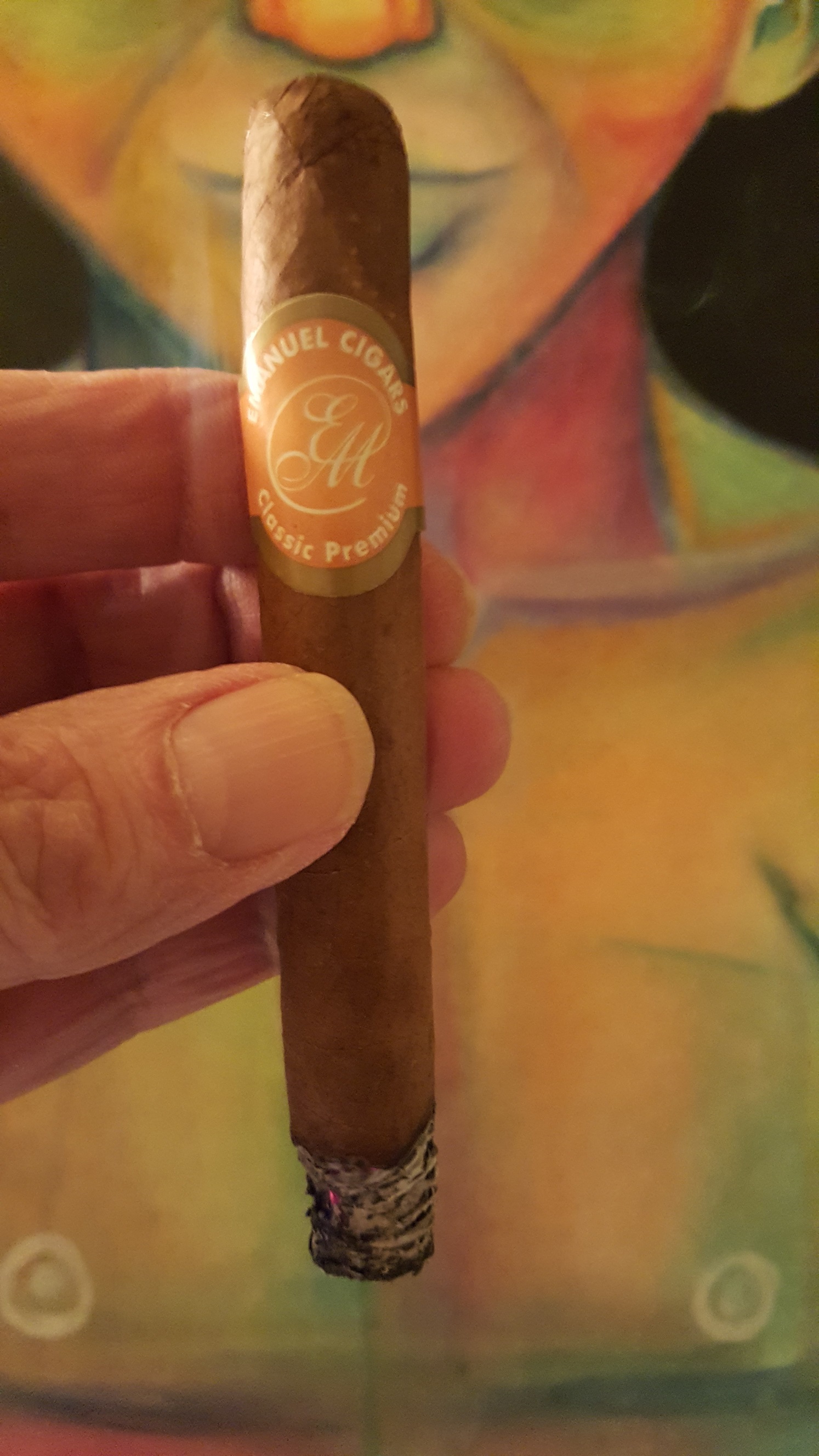









 Ruminations