Rum Review: Foursquare Zinfandel Cask Blend

Rum Review: Foursquare Zinfandel Cask Blend

In the closing months of 2016 I discovered 10 delicious rums all new to me. Three of these were from Foursquare distillery of Barbados under the direction of R. L. Seale. I reviewed two of these, the “2004” and “Port Cask Finish” last year calling them possibly the best rums I’ve ever had. At the time of their discovery I learned about this third member of the group but until recently couldn’t find any. That changed a few weeks ago and this offering is even better than the others!

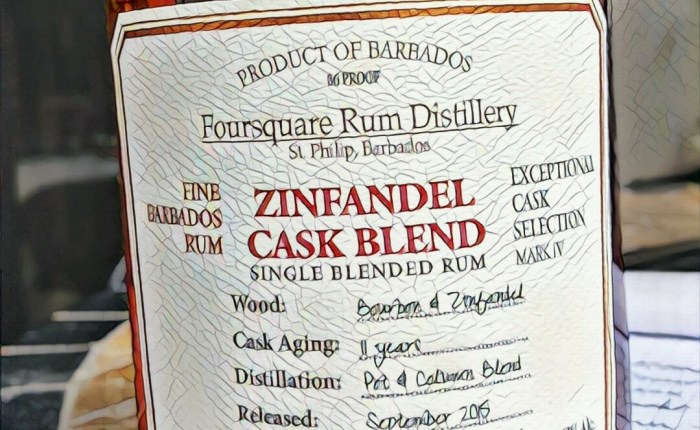
So what do we have here with this Foursquare Zinfandel Cask Blend? Aged 11 years in bourbon barrels and then [dry] zinfandel wine casks, bottled at 43% ABV. The label says clearly that there are no additives in this rum just like its cousins.

zincask1

Color: A beautiful medium amber
Swirled: Forms tiny droplets a few coalescing into thin and slow running legs.
Aroma: Brown sugar, maple syrup, raisen, and only a little alcohol. There are no burnt notes in the aroma, only sweetness. This perhaps the best smelling rum ever!

Sipped it is very smooth and creamy. There is a nice warmth going down the throat, but it comes up gradually and never burns. Every sip has hints of brown sugar, dried apricot, coffee, raisen, and maybe a little chocolate (or I imagining that?) along with the maple syrup I noted in the aroma. The finish is a bit short, but still sweet with no bitterness. Like the aroma the flavors have no burnt notes in them.

As I finish the glass the creaminess grows richer, the sweetness and other flavors fade back a bit, and the aftertaste gets a little longer. All in all this is one hell of a rum and with no sugar or other additives must get its sweetness from its time in the zin barrels. It is my understanding that these are dry barrels too imparting flavors only and not mixing the rum with a little zinfandel remaining in the barrel.

zincask2

At $45 here in California, this has got to be one of the best rum deals in the world! I cannot recommend anything more than this. It isn’t always easy to find R. L. Seale’s work here in the U.S. and this group of three rums seems to have popped up in California fairly recently. Seale is a well known name in unadulterated rums these days and I’m very glad to have discovered his work at last.

Zinfandel cask blend, as good as rums get!

Rum Review: Mezan XO Jamaican

Rum Review: Mezan XO Jamaican

This is something different. I’ve encountered that a lot lately. Investment grade Caroni (interesting, but not for me at its price), two Foursquare rums (both fantastic), Pusser’s Gunpowder proof (fantastic), and now this Mezan Jamaican XO. Different would be an understatement, not only compared to the last few, but to everything else I’ve ever had. Only a Papa’s Pilar light has been this pale, and I haven’t had one of those in a couple of years now.

mezancomposit

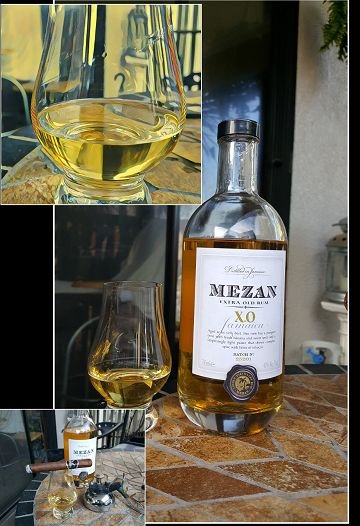
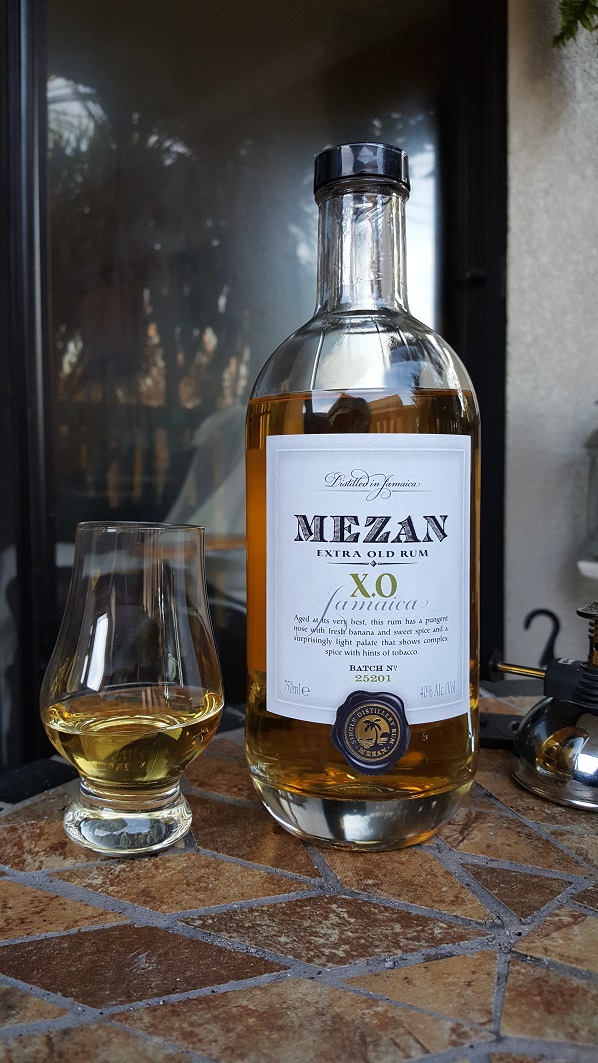
Mezan is known for its single barrel rums from Jamaica, Guyana, Panama, and Trinidad. This is not a single barrel rum but a blend from Jamaican barrels. Mezan finds and buys rum from various distilleries then ages and releases them under their own name. Their expertise seems to be in the selection of barrels to buy and they’re pretty good at it.

The Mezan website declares the rum free of additives and but “lightly filtered”. The XO has no age statement, and other than being a blend of “various ages” no information on the actual ages of rums in the blend is given on the label or Mezan website. The label does say that aged rums are here blended and then re-aged to meld them. An honest rum is worth a try and Mezan has the street cred to be experiment worthy. Even better this rum was $40 which puts it in the high end of the low-price price range for me (English Harbour, Pusser’s Gunpowder, and Mocambo 20 are also about this much), affordable if I really like it. The Mezan website says it should be even less at $30, but then this is California . The XO is bottled at 40% ABV and has a tight plastic cap.

mezanglass1

Color: very pale straw, only slightly yellow.

Legs: Tiny droplets form all along the border when you swirl it. A few slowly coalesce into a few thin legs that run slowly.

Nose: Less alcohol than I expected from the color but I remind myself this isn’t a “young rum”. There is lots of fruit on the nose: pineapple, apricot, white grape, and orange along with burnt sugar and light molasses.

Flavor: Bright and fruity. Some cherry, the pineapple, apricot, apple (??), grape, banana. Lots of fruit and also light brown sugar, something like a sweetened coffee, a hint of tobacco, and even some lemon. This is a very “bright rum” with lots of sparkling fruit notes. It is a little fiery going down, more than most 40% ABV rums, but that might be some of the young rums in the blend. A medium finish that turns slightly bitter. The texture is creamy and gets creamier as the rum mixes with air. The fruit and sweetness dials back near the end of the glass and a little oak comes out. But the creamy texture hangs out on the tongue and holds some of the fruit sweetness with it.

All in all a very different rum experience for me. Again worth being aware of how varied even honest rums can be. I’m used to the dark and over-ripe fruits but I don’t find those here. I also expected some “Jamaican funk”, but there is none to be found in this rum. For the price this is a great change-up from the darker rums I usually drink.

As usual I’ve paired this with a few cigars, but I haven’t found anything outstanding yet in any of the pairings but I have most of the bottle still, so there will be more to try. I’m also interested in how this rum will evolve in the bottle. Will let some sit for a while.

Worth $40? You bet! Not something I would drink every day, but a refreshing difference from time to time. I wonder how this will be on a warm day over a little ice.

mezanbot1

Rum Review: Caroni AD Rattray Cask Collection 18 year rum

Rum Review: Caroni AD Rattray Cask Collection 18 year rum

My first venture into “investment grade” spirit is not for the purpose of investing, but reporting. Why investment grade? Because the Caroni distillery (Trinidad) shut down in 2002 (or 2004 depending on your source) and there is no more of this being made. This particular bottle cost $100 from a San Francisco retail outlet in late 2016. Was it worth it? Well what have we got…

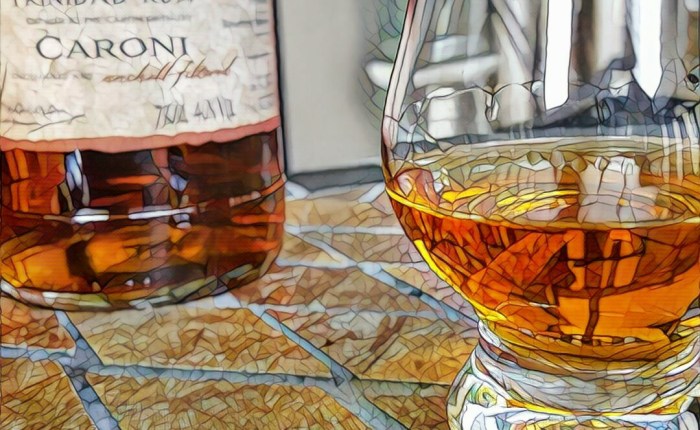
A.D. Rattray 18 yr old single (bourbon) barrel rum. The A.D. by the way stands for Andrew Dewar who with William Rattray conspired to produce this spirit. This by the way is not the same Dewar (John) of the Scotch brand, but perhaps they are related. The bottle itself is plain, but the label contains real information. There is also a nice cork, a nice touch these days. The label (Notice the English spelling and International date format) on the bottle says:

cask 118, 307 bottles
Distilled 24.06.1997
Bottled 01.06.2016
Uncoloured and unchill filtered
The ABV comes in at 46%, a bit higher than most rums, but not by a lot.

On the back there is a label that gives some tasting notes

Color Burnished Copper
Nose: Coconut, vanilla, and toffee apple
Palate: Pear drops, pineapple, guava, lime alongside lingering toffee with hints of tobacco. A kaleidoscope of tropical flavors.

caronibottle

I’ve had three glasses of this now, and paired it with three cigars (more on that below). Here’s what I get out of it so far…

Color: Medium amber, a little gold, and light copper would be about right.

Legs: Fast medium legs when swirled. I’m always amazed at how much rums differ in this even if it has little bearing on flavors

Aroma: Here it gets interesting. Alcohol distinct but not over powering, there is something like glue here too, but more like over ripe fruit than acetone, perhaps dunder. Plenty of brown sugar, perhaps burnt sugar, and there is ripe banana on the nose, apricot (overripe) orange. There is a hint of funk in all this over-ripeness of the aroma, but it isn’t up front.

Flavors: On the palate the funk is more up front, like Pusser’s blue label, and almost as strong but in some way more crisp, backed by a glassier texture that hides a lot of potential but doesn’t give much away at first. At first I can’t find any fruit in this taste other than the overripe funkiness of what might be spoiled fruit. I do find oak, lots of oak, bourbon-like smokiness, and lots of tobacco. There isn’t any sugar added to this rum so it is dry, but there is a thin brown sugar sweetness to it offsetting the somewhat bitter tobacco notes.

What about the bottle’s own tasting notes? Coconut? Vanilla? Maybe but a stretch for my palate, maybe charred vanilla, but I don’t get any fruit out of it except of the dunder-like overripe sort. If I’ve ever experienced an over-oaked rum though, this would be it. 18 years in a barrel is a long time for a rum. Still some people go for that flavor and my palate is maturing to the point of appreciating the effect of the slightly sweet and bitter together. Toward the bottom of the glass I begin to sense banana and a little more sugar than at the beginning. A little water dials the funk back a bit and brings out more sweetness. I’ll experiment with that a bit more.

Texture: Starts out oily in a strange way I’ve not every noticed before. It looses some of that as you drink it but gets creamier in a sugary way as the glass rests in the air. The rum comes across very smooth for its 46% ABV with no added sugar. Perhaps 18 years adds that. The alcohol does give a very warm cast to the finish, your mouth seems to heat up with it, much more than I’ve noticed with rums at the usual 40%. Other reviews say the finish is medium, but the warming effect lasts a long time and flavors on the back of the tongue fade slowly. Seems like a longish finish to me combining the sweet and the bitter all the way to the end. I know there is more complexity here than my palate can find. I have the remainder of the bottle to find out.

I’ve paired three cigars with glasses of this rum. They were all good, but a Drew Estate Liga (Papas Fritas) stood out. These sticks have a nice nut and dark-chocolate sweetness to them, and the rum brought both out well.

So is it worth $100 a bottle? Not by my palate, though I can appreciate it. Like Pusser’s blue, it is a rum I would drink from time to time to keep my palate honest and remember what a wide variety of flavors can be found in rums. I know a rum drinker who absolutely loves Pusser’s blue and thinks rums lacking its funk are not worth the time. He would want to add this one to his list I am sure. But Pusser’s blue is $25 a bottle, little enough for that reminder. If I’m going to spend this much on a rum, I’d rather it not make me work so hard to find all the flavors. But yes it is good, yes it is complex, and yes its oak and (to me) tobacco notes dominate, but that isn’t all bad. It is definitely unusual, different, and rare. That is sometimes worth a high price.

caroniglass

Rum Review: Pusser’s Black Label Gunpowder Proof

Rum Review: Pusser’s Black Label Gunpowder Proof

Pusser’s a well known rum brand at a reasonable price. Their “blue label” product (reviewed here) is downright inexpensive and claims to be the authentic blend used by British Navy for some 200 years (from about 1730 to 1970). So what is this black label “Gunpowder” proof all about? In the 19th century (or before) the British Admiralty began issuing an alcohol ration to every sailor. At first brandies and such were tried, but these tended to spoil over long voyages. By contrast rum seemed only to get better and so by around 1730 all the rations were converted to rum. At first “the tot” was a half pint of over proof rum, a full cup. That’s a lot of distilled spirit at 57%+ ABV. Over the years the ration changed. First water was added to bring the ABV (and hopefully drunkeness) down and then the ration was cut in half and eventually in half again. But at the beginning it was potent stuff and the sailors knew how to tell they were being cheated. As it turns out, if you put a little bit of gunpowder on paper and pour a little rum over it (any distilled spirit will have this effect) if the ABV is above a certain “magic number” the gunpowder will still ignite even wet. If it refuses to ignite, the ABV is below the magic number.

That magic number turns out to be 56% ABV! But Pusser’s “Gunpowder rum” is bottled at 54.5% ABV! The gunpowder will not ignite. It all comes down to marketing, and they were hoping you, the consumer, wouldn’t know! Well now you do! But “Gunpowder proof” or not, this is a damned good rum!


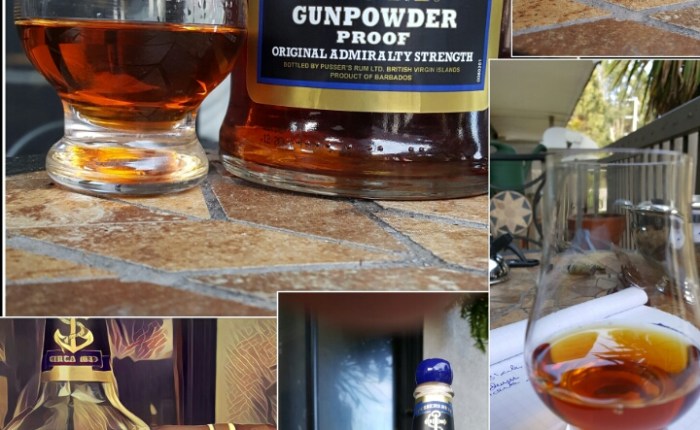
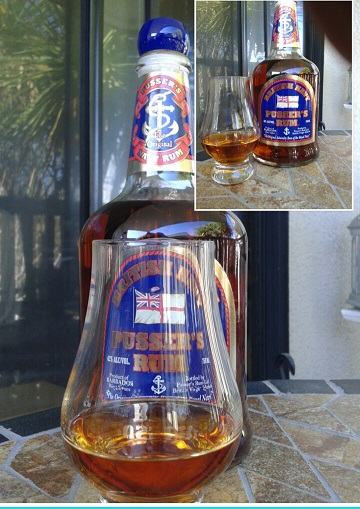
gunpowderglass

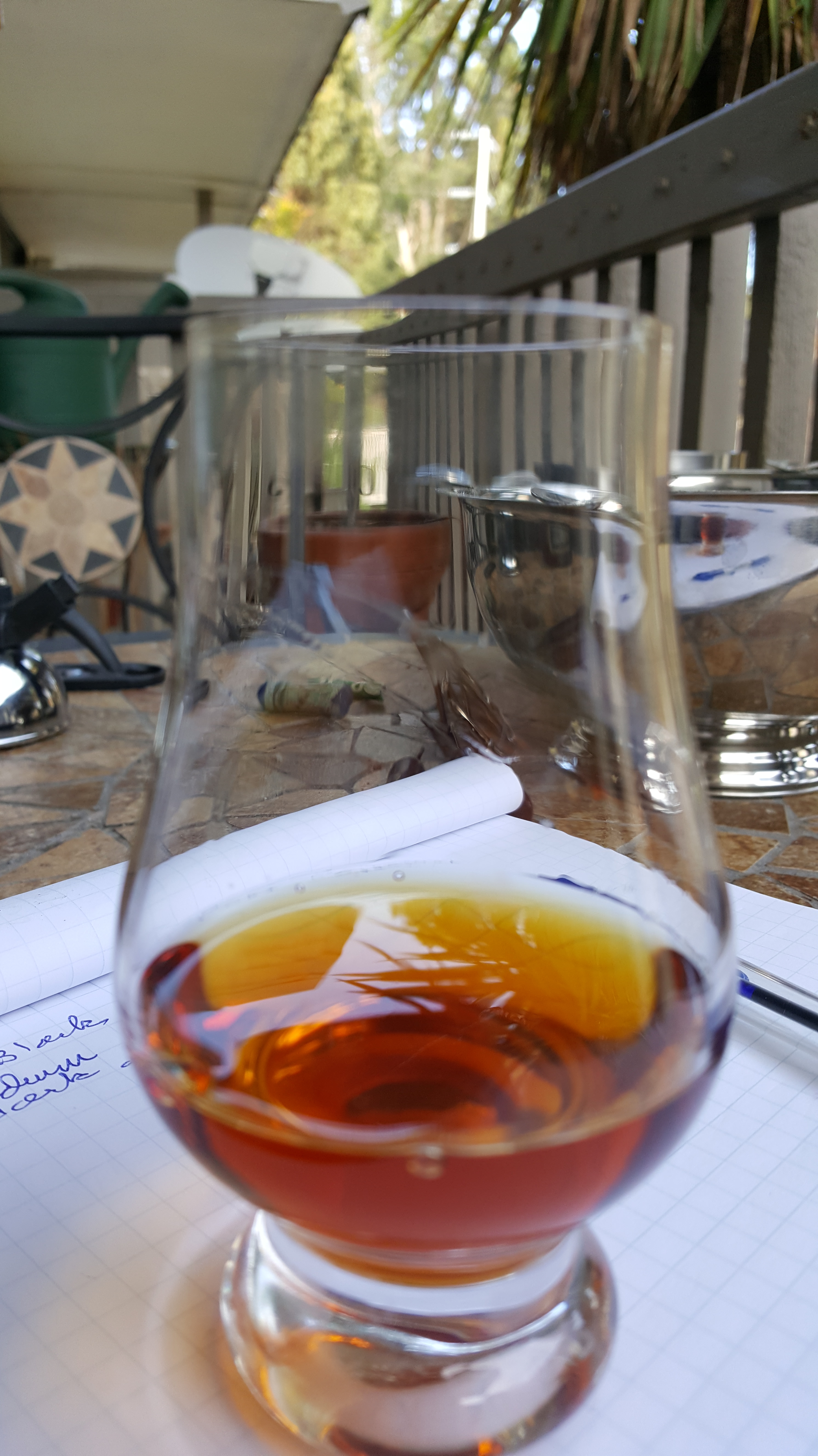
Color: Medium dark amber shading to a copper red..

Legs: Tiny beads form all along the border when the glass is swirled. After a long while they begin to
coalesce into thick legs that run slowly down the glass

Aroma: Alcohol of course but not so much as you might expect from the 54.5% ABV at which the rum is bottled but it does manage to tickle the back of my throat if I inhale the glass deeply. No acetone notes, this is not a “young rum”. There is plenty to smell though. Prune, raisin, dark brown sugar, and a little bit of that “pot still” funk that one gets so much of in the 40% ABV “blue label” product. But in this version the funk is transformed from moldy forrest floor to over-ripe dark fruit.

Flavors: This rum shines on many levels from the layers of its aroma to the flavors that come through on the palate. Rich in dark fruit, prune but especially raisin, treacle (burnt caramel), vanilla, tobacco, and oak round it all out. The pot still funk is there too but far less intense than it is in the blue label and as in the aroma it tastes more like over-fermented raisin than old socks.

Texture and finish: The rum is a little creamy, but gets creamier as the glass is consumed. The finish is medium, brown-sugar sweet, and a little hot as the extra alcohol takes affect in the swallow. But it is not a harsh finish by any means, the rum shows its pedigree. There is no need to dilute this rum, it is nicely smooth at full strength. But a tiny bit of water didn’t hurt it and brought more brown sugar sweetness and frutiness to the foreground.

Speaking of sugar, the sugar test reference shows 7g/l added sugar, a tiny bit more than the 6g/l in the blue label, but these are low numbers. Some rums go as high as 40g/l, and for comparison, coca cola has a whopping 108g/l!!

gunpowder1

For roughly $40 at most retailers Pusser’s Gunpowder rum is a bargain. The price is about 60% above the usual blue label price (another outstanding value its price of about $25 most places) but it is a much better rum experience over all especially if the moldy funk of the blue label product is off putting to your palate.

I have paired the Gunpowder rum with a few cigars and they all seem to go well. This rum seems to hit the sweet spot as goes enhancing tobacco flavors. This might turn out to be the best cigar-pairing rum ever!

The navy tot by the way was often mixed with a little lime juice (to prevent scurvy) and sugar (undoubtedly to smooth out what would have been very young rum). This process may have pushed rum into the “anything goes” spirit we often see in products today. But by the way, a squeeze of lime is pretty good in rum…

Rum Review: Foursquare 2004 and Port Cask Finish

Rum Review: Foursquare 2004 and Port Cask Finish

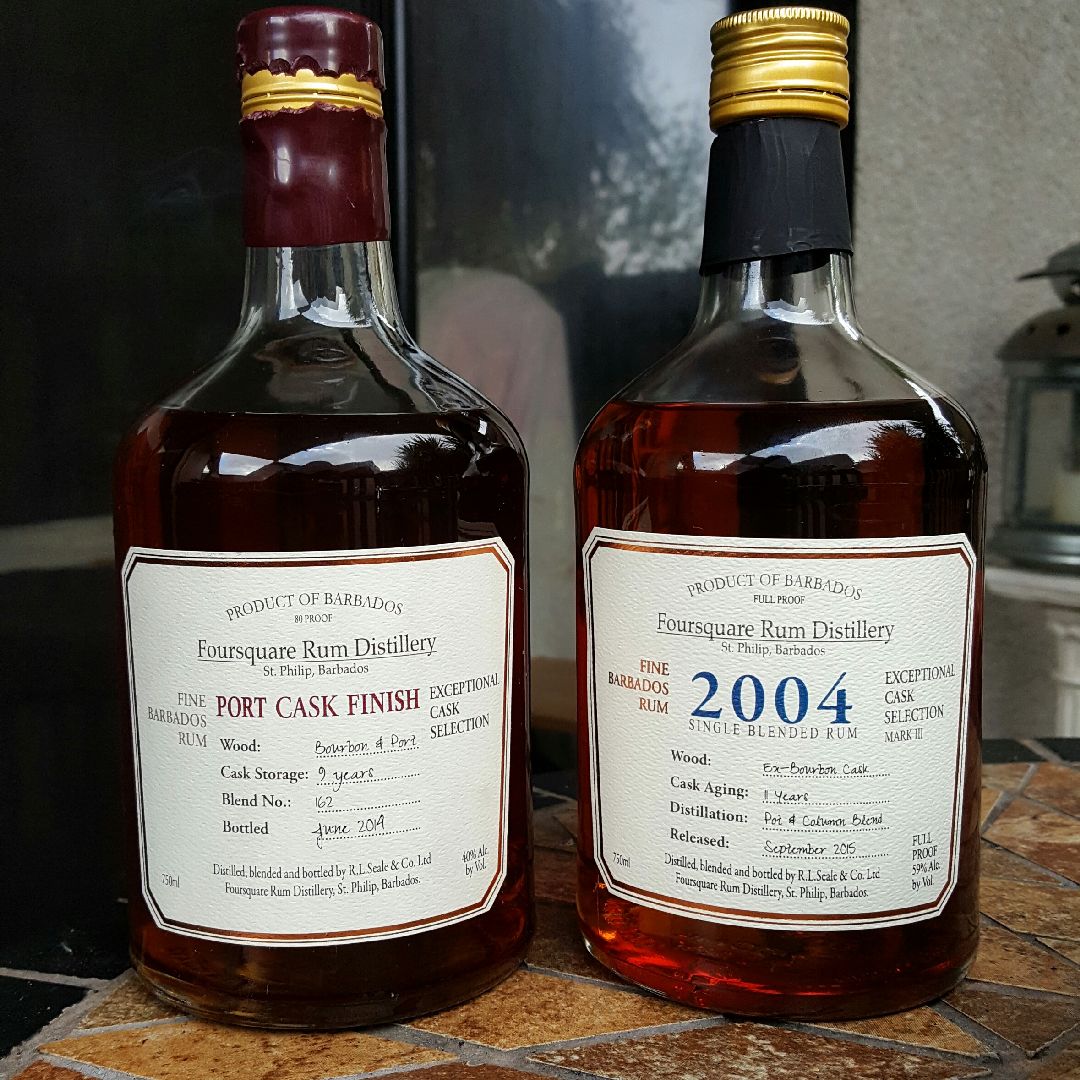
As in some other paired reviews done here, these two rums share a family resemblance. They are from the same Foursquare distillery in Barbados. It is possible that the family resemblance stems from the same feed stock and stills. What distinguishes these is the aging process and also the final ABV. The 2004 is offered at 59% ABV and spends 11 years in American Bourbon casks. The Port Cask comes in at 40% ABV. It spends 3 years in bourbon casks and then another 6 in barrels previously used to age Spanish Port. At least one other review of these points out that both rums are unadulterated (no added sugar) and the port barrels used for the Port Cask started out dry, without any port sloshing around. Both are “honest rums” whose distinct flavors and aromas come from the genuine care taken in distillation and aging under conditions conducive to their exceptional development.

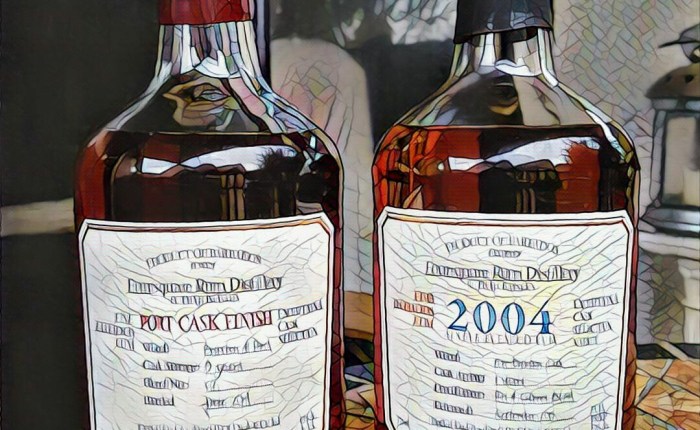
foursquarepcprisma-jpg  First opened was the “Port Cask”. The label here, as with that of the 2004, is one of the nicer I’ve seen; not for art’s sake, but for the information it conveys about the rum including its age, barrel number, and a firm declaration that nothing has been added to this rum. A heavy wax seal concealed a metal screw cap.

Pouring, it is a medium dark amber shading to red. Swirled it produced tiny tiny beads that take forever to form into legs of varying thickness that slowly at first, and then more quickly drop into the liquid. Aroma is marvelous. There is so much in here. Just a little alcohol, fruit like apricot, orange, grape, raisin, and banana. There is a little vanilla, brown sugar, and a little burnt caramel. There is even a hint of funkiness like the dominant note in Pusser’s or Appleton 12, but it is barely there. None of these is overwhelming they all seem balanced and available to the nose. The smell is sweet, I almost didn’t want to taste it for fear of spoiling the effect.

But I did take a sip. My first impression was “Wow! This might be the finest rum I’ve ever had!” Some days and a few glasses later I remain convinced of it. This doesn’t mean it will replace some of my best cigar pairing libations like the Dos Maderas 5+5, Barbancourt 5-Star, or my Mocambo 20 year, but as goes the quality and sophistication of the drink I think this one takes the prize at least if you like a fairly dry spirit. Like the aromas, there are a lot of flavors in this one, but they all come with a light touch that lets you tease them out one by one. Both bright and dark fruit are present as is a little burnt brown sugar and vanilla. There is a hint of coffee too. The funk I thought I sensed on the nose does not appear on the palate. The rum is slightly creamy and most interesting of all, despite the dry notes up front there is a distinct fruit-sugary sweetness on the long aftertaste. How do they do that? The swallow is smooth but with a little more fire than I find in most of my 40% ABV rums and this effect is probably due to the absence of added sugar.

foursquareallcomposite-jpg  I opened the 2004 a few days after the Port Cask and have had a few glasses. A bottle identical to that of the Port Cask, same style label, and same metal screw cap — though this time without the thick wax seal. Color in the glass is almost the same as the Port Cask, perhaps a slight shade lighter. That difference must be the port casks because the 2004 offering is aged two more years for a total of 11 in bourbon’d oak. Swirled in the glass the rum makes fast but thick legs that quickly coalesce as they run. The aroma is a little thin carrying hints of caramel and brown sugar, vanilla and perhaps raisen. Some sharpness of alcohol comes through but surprisingly lightly considering the ABV, a nod to the aging time.

At 59% ABV this is a kick-ass rum. Other reviews tell me that this is not an “overproof” rum, but a genuine from-the-cask bottling the blender thought worked well at this ABV. As high in alcohol as it is, this rum can be sipped neat. One can feel the smoothness of the aged spirit even as one also notices the fire that comes up as you swallow it. That it can be sipped this way is a testament to its fine pedigree. Even at full strength it has a little creaminess and there are flavors melded into the alcohol but they are hard for me to tease out. Of all my spirits this is the only one I’ve discovered that stands up to added water without tasting like a diluted spirit. I found that about 1/4 teaspoon in a dram (1.5 oz) glass not only cuts the heat (only a bit) but enhances flavors. In particular, I get apricot, green grape, raisen, vanilla, and caramelized brown sugar in the flavors once a little water goes in. I remind myself to try this rum with an ice cube on the next warm day around here.

A quick calculation tells me that my 0.25 t-spoon brings the ABV down by only 3%. Not much but it makes a big difference in the flavors that come out of the rum.

As goes cigars I have nothing much to report. I’ve had only a few glasses of each of these bottles now and so paired them with but a few cigars. So far nothing stands up and shouts “great pairing” at me, but of course all the combinations have been enjoyable.

Neither of these rums will appeal to you if you like the sweeter stuff, even the moderately sweeter stuff. Both are dry up front with a tickle of sweetness. The Port Cask is distinctly sweet in its aftertaste, while the 2004 is less so but adding some water brings the sweetness out. Even undiluted it avoids the bitterness that comes up at the end of a swallow for some rums.

In my rum journey I have transitioned very far from the sweeter offerings I enjoyed early on (Atlantico, Papa’s Pilar, Diplomatico R.E. and others) to much drier rums. These two from Foursquare are exceptionally good. I think the flavors in the Port Cask are a little more fulfilling, but the 2004 is a grand example of superb refinement in rum. At roughly $40 the Port Cask is exceptional. At $70 the 2004 is of course more expensive, and more subtle version of the Port Cask.

foursquarebothflat-jpg

Rum Review: Dos Maderas

Rum Review: Dos Maderas

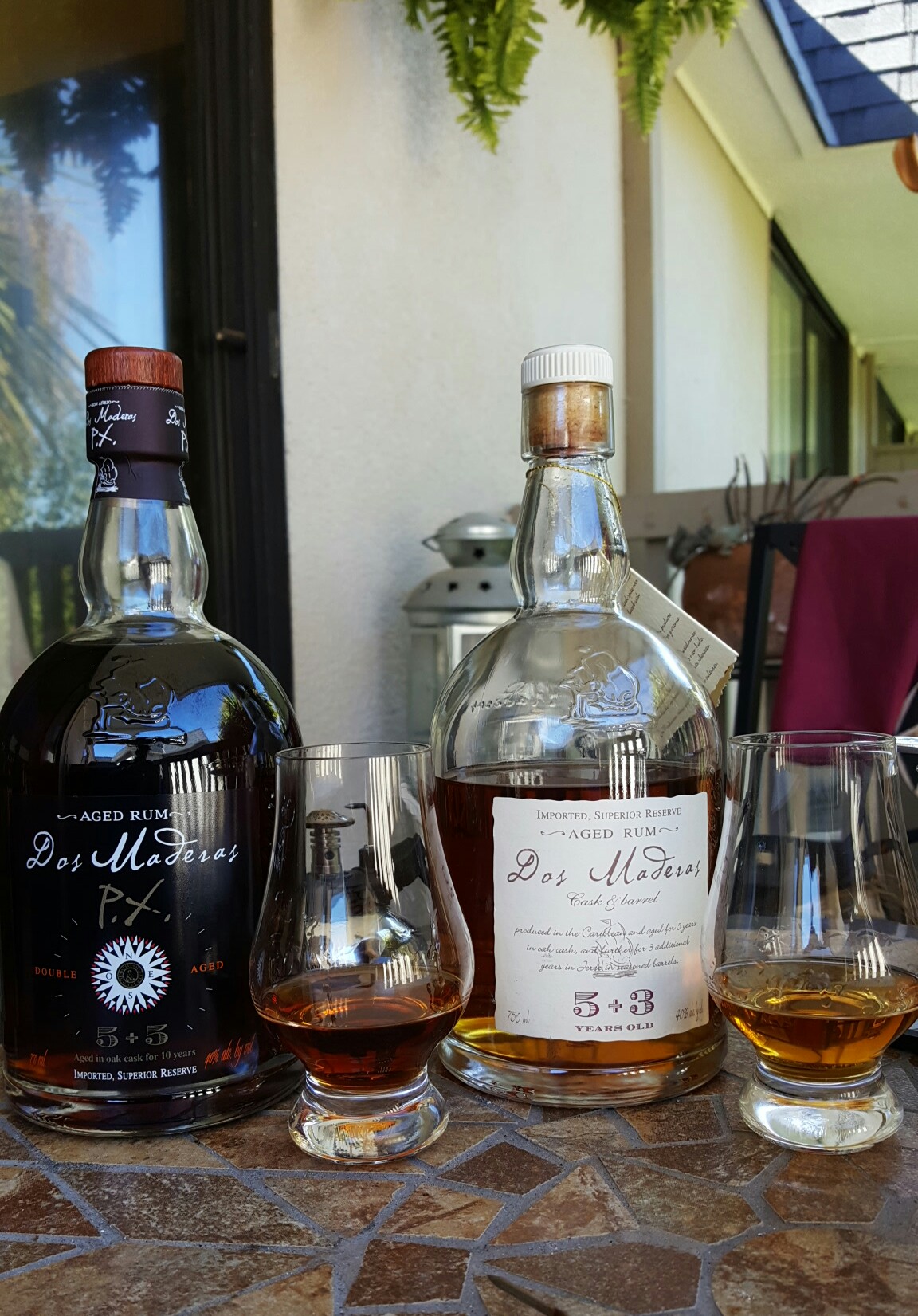
lookat1796B

Here we have a pair of Spanish rums that go together like siblings, but in this case not nearly as closely related as the Rons del Barrilitos I reviewed previously. These two are more like distant cousins. To my palate, that they are related at all is only because they both begin with a blend of Guyana and Barbados rums. From the marketing literature, it isn’t clear if the distillates are blended first and then aged or aged separately for the first 5 years in bourbon (charred oak I presume) casks somewhere between Guyana and Barbados! Really I wish the marketing people would say more! In either case, the first number in the rum’s name, the ‘5’ refers to these first 5 years. “Dos Maderas” means “Two Boards”. Perhaps this a reference to barrel staves from two kinds of barrels?

The rum is then shipped to Spain where it is blended (if it hadn’t been already) and aged for a further 3 (5+3) or 5 (5+5) years in casks that once contained the company’s 20-year-aged “Dos Cortados” (“Two Cuts”, I suspect the grape) sherry. I’ve never had Dos Cortados, but I’d certainly give it a try. One website claims the 5+5 rum is then aged an additional 2 years in “extra old” sherry casks. Why then they do not call it 5+7 or 5+5+2 I wouldn’t know.

But to get to the heart of the matter, these are both good rums. To my palate they are not at all alike.

dosMaderas3

First the 5+3. 40% ABV
Sugar: No results shown on the sugar test page. Doesn’t seem like there is sugar added.
Color: On the light side of a “medium amber”, not quite yellow — the color difference can be most clearly seen in the last picture at the bottom.
Legs: When swirled forms fast medium legs.
Aroma: Lots of notes in this, mostly brighter fruits. Apricot and orange dominate. There is banana, some alcohol but no varnish notes. I don’t get much molasses or sugar from this, no dark notes at all except some white oak in the background.
Flavors: Only a touch sweet, this is a dry rum. Reminds me immediately of English Harbour. Very smooth, but enough heat to be noticed rises up in the finish. The finish is short and a little flat. Not bitter, but not sweet either. Lightly creamy, with some butter, and a note of maple sap. Not the syrup you buy for pancakes, but a rawer sap from which it’s made. I think there is some oak in this too laying quietly under everything else. Interesting that I don’t taste any of those aroma fruits on my tongue, but they still come through the nose when you take a swallow.

dosMaderas1

Next the 5+5. 40% ABV
Sugar: One test shows 36g/l which is on the higher side, but in the end the sweetness is well cut.
Color: On the darker side of a “medium amber”. Brown, some red, no yellow.
Legs: Swirling, very slow, start out many tiny fingers that slowly coalesce into thick legs.
Aroma: Raisin dominates, some alcohol, no varnish. Tobacco, burnt brown sugar (treacle), milk chocolate, and a very smokey charred oak.
Flavors: Creamy, much sweeter than the younger rum, but not very sweet. Charred oak comes through as does the raisin and tobacco. A long sweet finish with chocolate in it, coffee and the unmistakable taste of a good sherry. This is a far more complex rum than the 5+3, sweeter and layered with much more flavor, especially on the darker side. The tobacco and coffee compensate perfectly for the rum’s sweetness leaving no bitterness. Nicely done for my palate!

dosMaderas2

Both are great rums actually. If you like a lighter, less sweet, youthful but not young, rum, the 5+3 is an excellent choice and as I noted, very similar to English Harbour for about the same price. the DM is a tad less sweet and creamy compared to the EH. On the other side if you are looking for a sweeter rum that isn’t at all “very sweet”, the 5+5 is superb and not too expensive at around $45 here in California. In particular if you like a good sherry (I do, is the only wine I ever care to pair with cigars) you will enjoy the DM 5+5.

Drink up me hearties! And don’t forget to enjoy a good cigar while you’re at it!


Rum Review: Old Monk XXX

oldmonk

Old Monk 7 years-old blended XXX “Very Old Vatted” — Yes it says all of that on the label.

Color: medium amber-gold! Very pretty!
Legs: fast, thin
Aroma: Tobacco, coffee, molasses, alcohol, banana, apricot, vanilla — Wow! All sorts of things packed in there.

Taste: Vanilla up front. Sugar, brown sugar, burnt caramel (treacle), raisin, allspice (or cloves and cinnamon). Some creaminess. Like the aroma, lots of flavors you actually taste!
Aftertaste: medium, slight heat, sweetness fading to alcohol, slightly bitter at very end.
Sugar: Unknown. The Rum Project Sugar Test page lists “Old Monk Supreme” (not the same product I do not think) as having only 3g added sugar, that’s very little. But this one is not listed.

My third bottle of this rum, it is something of a controversy. Was once one of the world’s leading sellers in the rum category, not necessarily because it is so good, but because it is inexpensive and adored (or once was) by a vast following in India. Yes, this is an Indian rum. Personally I like it. It tastes adulterated with sugars (perhaps) and other flavorings, but for all its various sugar flavors it’s only a little sweet. Adulterated (if it is) doesn’t have to mean bad, and after all, even for relative purists like me, it’s what some rum is all about. It reminds me of Indian food. Like Indian cuisine, a huge number of flavors are piled up on one another. Some people just don’t like that effect, or at least it isn’t their favorite sort of flavor, but sometimes it’s the difference from “your normal” that makes the experience memorable.

So why drink this rum?

1. It’s inexpensive. At $18 around here it is one of the two lowest price, aged, and easily sippable rums I’ve found around me, Gosling’s Black Seal being the other at the same low price.
2. It isn’t a bad rum, just different. The price makes it well worth the experience.
3. How many Indian rums do you know? Broaden your horizons!

Rum Review: Ron Del Barrilito 2 and 3-star

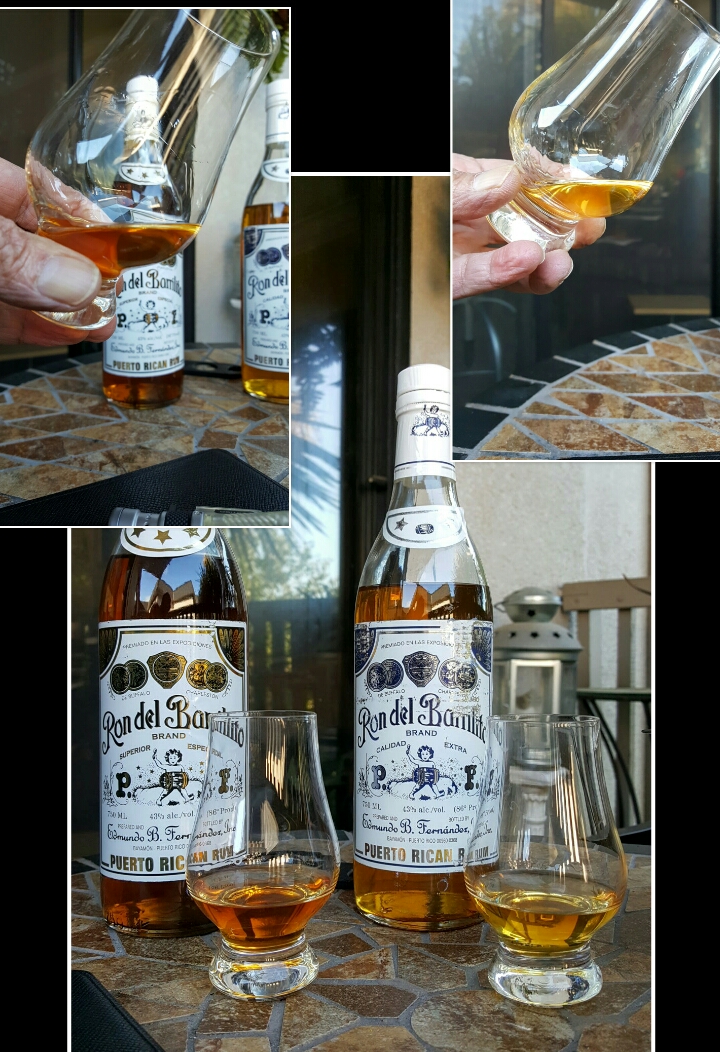
RonDelBaralito

I bought this pair of rums based on decent reviews, decent prices, and my never having had a Puerto Rican rum. The bottle is of the plainest “bar style” with a plastic cap. There is no age statement on either bottle. The labeling is pretty much the same with the lighter called “Calidad Extra” and the darker “Superior Especiale”

I decided to review them together because having tasted them, now through about a third of each bottle, they are still very similar. Imagine two brothers, an older and a younger whose family resemblance is remarkable. Neither can be mistaken for the other for one has matured by some further years. Still that they began with the same stock seems indisputable. It is that way with these two rums.

2-Star

In the glass the 2-star is very light in color, similar to Barbancourt 5-star, and a little darker than Papa’s Pilar light. Swirled it makes lots of thin quick legs and a few thicker ones. The aroma is bright. At 43% ABV this rum is slightly more alcoholic than most of my others. It has alcohol and some acetone on the nose, but not as much as I usually find in a “young rum”; a little sharp when you first pour it. There is fermented banana, apricot, a little pineapple. There don’t seem to be any darker notes in this rum, just fruit. The Rum Project gives it 5g/l added sugar, very low. When sipped there is sweetness of light brown sugar, a slight creaminess, again bright fruits. The finish starts off short with some burnt caramel bitterness, but gets longer, smoother, and sweeter as you progress through the glass. It does have a little fire, but pleasantly so. I think the Barbancourt 5-star for $2 more is more complex as is Pussers, but this is not at all a bad rum at its price point ($23 around me).

3-Star

The 3-star is of course the older brother. In the glass it is darker by a shade than its sibling, a little darker than English Harbour and perhaps Pusser’s by a whisker. Not a dark rum by any means, but a beautiful amber still on the lighter side. Swirled, it makes fast medium legs. I expect a little more creaminess from this one. The Rum Project lists its added sugar at 7g/l, a little bit more than the 2-star, but still very low. The nose has the same sharp alcohol as the 2-star, a little less acetone, all the same fruits, and in addition something like light raisin and burnt brown sugar or caramel and a hint of tobacco. The darker notes are there but subtle. The brighter fruits still stand out. Sipped the burn is similar (also 43% ABV) to the 2-star, slightly more fiery than most of my rums. The sweetness level is about the same as the younger rum, and the apricot, banana, and maybe even the pineapple. As you go through the glass a little burnt orange also shows up. All along there is a little more creaminess, and the sweetness is more that of a darker brown sugar. The finish is medium with a little butter and more burnt brown sugar. The 3-star tastes remarkably like its younger brother with a little more complexity as behooves a more mature sibling. At $33 dollars it competes with the likes of English Harbour ($31 recently) and Pampero Aniversario R.E. ($35) both of which are better in my opinion.

Cigar pairing potential? I smoked three or four different cigars with each of these rums. I didn’t notice anything outstanding, but then there weren’t any clashes either. Either is a good rum with lighter or darker cigars. Even the fruits of the 2-star went OK with the bitter coco and coffee of an Asylum Nyctophilia.

Would I buy these again? I think they are both good offerings at their price points. There are other rums I like better at those price points, but this would be purely a matter of taste. You might easily find these two better than the competitors I would select. In any case their price is not out of line with their quality. If you like Barbancourt 5-star you should at least try the 2-star and if you like English Harbour, give the 3-star a go.

Rum Review: Pampero Aniversario Reserva Exclusiva

PamperoARE

My second rum going back 5 years now as I was only beginning to explore the category and I chose well.

Very dark, deeply mahogany red color is very attractive. When swirled in the glass the legs take a long time to appear and then they are very thick, slow, and teardrop shaped.

A Venezuelan rum, blended from what I can read about it on the net. There is no age statement on the bottle, but I’m guessing the rums in the blend are reasonably well aged from their color, the lack of strong acetone notes on the nose along with the dark fruit notes, and the dark richness of the flavors. The rum is shipped at 40% ABV.

On the nose there is an amazing burst of aroma. First a little alcohol but not overwhelming and only the slightest hints of acetone notes telling me the rum is properly aged. In addition I note dark coffee, tobacco, apricot, pineapple (hint) prune or rasin, brown sugar, and molasses. A heady combination.

As it turns out aromas are easier to pick out here than flavors. There are spice-like flavors of cinnamon, burnt caramel, dark fruit, bitter chocolate, tobacco and coffee. The flavors are difficult to tease apart, but the mashup is very satisfying and seems to have a lot in it. There is a little creaminess but not nearly as much as some of my other rums. Like most of the others in this “better product” category there is but a little alcohol, but enough to tell you that it is there. The finish is medium and a little bitter reminding me of charred wood, perhaps from the charred oak bourbon barrels in which the rum is aged. The other rum I’m reminded of here is Old Monk, but this one is better. A similar darkness laced with fruit and spice, but in this case the blend is cleaner and there is less of the add-on spice notes than in the Monk.

Sweet, but not very sweet. According to recent sugar tests the Pampero comes out to 12g/l which is only very moderately sugared.

Would I buy this rum again? I’ve been through many bottles already and it has remained a consistent rum for me unlike some others which I loved at first and then didn’t. The price is getting up there though. Was around $40 when I first bought it years ago, but now getting into the $45+ range and so competing for my dollar with several other rums I love in that price range like Dos Maderas 5+5 and El Dorado 15, all three being about as expensive as I can go these days. Yes I will buy it again because it is a very good rum, but it will have to wait its turn.

Here are links to two other and more detailed reviews.

The Rum Howler Blog 

The Fat Rum Pirate

Rum Review: Pusser’s Navy Rum

PussersPic

This rum has a real history. The British navy used to issue a “rum ration” to all its sailors starting way back in 1655. Before this the navy issued beer rations and also tried wine and even brandy, but none of these spirits fared well exposed to the temperature variations experienced in different parts of the world. Rum, by contrast, just seemed to get better with time. The ration ended in 1970 (and British sailors held many a mock funeral for it) , but the formula for the rum was preserved and the makers of Pusser’s bought it from the British Admiralty on promise of never disclosing it. There are (I believe) some 7 different Caribbean rums in this blend making it one of the more complexly blended rums around. What the sailors actually drank, at least in the early days of the ration, was distributed at a higher ABV (56%) and tested by pouring a bit on some gunpowder. If the alcohol content of the rum is less than 56% the gunpowder will not ignite, but at 56% and above, the gunpowder burns.

In the glass: Medium amber about half way between my lightest and darkest rums. Nice color. Swirled makes fat legs that start slowly and then speed up as they drift down the glass.

On the nose: If you take a deep whiff when first poured you get a tremendous hit of a sort of vegetal funk that some have called putrid. I am not a scotch drinker, but the aroma suggests to me what a heavily peated scotch smells like, though scotch drinkers tell me its not. But it does smell a bit like old socks or the moldy undergrowth of a wet forest. There is also fruit, apricot, orange and rich caramel, a lot of complexity on the nose. As the rum breaths the funk drops off a bit but it remains the dominant aroma throughout.

In the mouth: One of my creamier rums, but the cream comes along with some fire. At 42% ABV this rum has a little more alcohol than the others I’ve been drinking (although the Pusser’s “Gunpowder” rum at 54.5% ABV is supposed to be available in the U.S. sometime this year and I will certainly try it). It has a little fire going down, but just enough to remind you it’s an alcoholic drink. Sugar content is low, 6g/l according to the measurements.  Note that the rum is listed at 40% ABV on that list, but that is not correct. Overall the rum is thick feeling, perhaps more so than any of my other rums except for the El Dorado  which has a lot more sugar.

Flavor: Funk! Yes that aroma of old socks or wet mold comes through loud and clear in the flavor. I am told by another rum aficionado that this vegetal taste comes from the distillate of a very old fashioned wooden pot-still used in the blend. This flavor rides on top of everything else. The rum is sweet but not very sweet and the funk cuts it anyway. There is molasses in there and brown sugar, caramel, and raisin, maybe some banana too. There are a lot of flavors to tease apart here, but everything starts with the funk.

Pusser’s is one of the world’s great rums thanks to its history and staying power. It is not a rum every rum drinker likes. Either you like the funk or develop a taste for it, or you just won’t like this rum. One reviewer who didn’t like it called it “putrid”. I’ve noticed this same funky note in two other rums, Appleton 12 year and El Dorado 15. It is pretty up-front in the Appleton though not as strong as the Pusser’s while it presents as a background note in the El Dorado. I’m sure there are many other rums, any that have a wooden pot-still component in the blend, that have it too, but I haven’t found them yet or they are too expensive for me to try. That’s the other amazing thing about Pusser’s. At $25 for a 750ml bottle in California it is among the least expensive rums I have, the Barbancourt 5 star and Gosling’s Black Seal being the other two that are really good. Will I buy this rum again? I’m on my 4th bottle now and I’m sure there will be more to come!

Drink hardy my sailor and land lubber friends!